North African Campaign Overview
The North African Campaign unfolds across Egypt, Libya, and Tunisia between 1940 and 1943, drawing British, Commonwealth, Italian, German, Free French, and American forces into a prolonged struggle for control of the Mediterranean coast and the approaches to the Suez Canal. Fought across immense distances, the campaign is shaped as much by ports, supply routes, fuel, water, and vehicle maintenance as by the armies confronting one another on the battlefield.
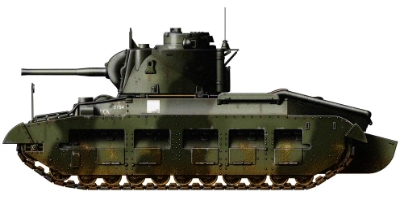
Following Italy's entry into the war in June 1940, frontier clashes begin between Italian forces in Libya and British and Commonwealth troops defending Egypt. The main campaign opens in September when the Italian Tenth Army advances across the Egyptian frontier and occupies Sidi Barrani. Its exposed camps and overstretched supply lines leave it vulnerable, and in December British and Commonwealth forces launch Operation Compass. Conceived as a limited raid, the operation develops into a major offensive that carries through Nibeiwa, Bardia, Tobruk, Derna, and Beda Fomm, destroying much of the Italian Tenth Army and driving the survivors from Cyrenaica.
The scale of the Italian defeat prompts Germany to intervene. In February 1941, Adolf Hitler launches Operation Sunflower, sending German armoured and motorised units to Libya under General Erwin Rommel. The arrival of the Afrika Korps stabilises the Axis position before Rommel launches a rapid counteroffensive across Cyrenaica. British and Commonwealth forces retreat towards Egypt, but the Australian-led garrison at Tobruk holds the strategically important port against repeated Axis attacks and remains under siege for more than seven months.
British attempts to relieve Tobruk during Operations Brevity and Battleaxe fail, but Operation Crusader succeeds in November 1941 and forces Rommel to withdraw across Cyrenaica. The respite proves temporary. Renewing the offensive in January 1942, Axis forces advance eastwards once again and defeat the British Eighth Army at the Battle of Gazala. Tobruk falls on 21st June, and Rommel's forces cross into Egypt before being halted at El Alamein, where the narrow battlefield between the Mediterranean coast and the Qattara Depression prevents them from outflanking the British position.
After containing the Axis advance during the First Battle of El Alamein and the Battle of Alam el Halfa, the reorganised Eighth Army passes to the offensive under Lieutenant-General Bernard Montgomery. The Second Battle of El Alamein begins in October 1942 and ends with the Axis army retreating westwards across Libya. The victory removes the immediate threat to Egypt and the Suez Canal and marks the beginning of an advance that carries British and Commonwealth forces more than 1,500 miles towards Tunisia.
As Rommel retreats from Egypt, American and British forces land in French North Africa during Operation Torch in November 1942. The Axis responds by occupying Tunisia and rushing reinforcements across the Mediterranean, creating a final defensive bridgehead between the advancing Allied armies. Fighting continues through the winter and spring of 1943, including the battles of Kasserine Pass and the Mareth Line, as the British First and Eighth Armies, together with American and French forces, close in from the west and east.
The campaign ends in May 1943 with the collapse of the remaining German and Italian forces in Tunisia. Cut off from reinforcement and evacuation by Allied naval and air power, the Axis armies surrender, bringing organised resistance in North Africa to an end. The victory secures the southern Mediterranean, opens the way for the Allied invasion of Sicily, and leaves Axis forces facing a new front on the European mainland.
This overview provides a gateway to the individual North Africa timelines, beginning with the Italian invasion of Egypt and Operation Compass, followed by Operation Sunflower and Rommel's first offensive. Further timelines covering the later desert campaigns, El Alamein, Operation Torch, and the fighting in Tunisia will be added as this section develops.