Introduction to Leaders and Commanders
World War 2 was not only a clash of armies and ideologies, but a confrontation of powerful personalities whose decisions shaped the course of history. Behind every major battle and turning point stood leaders—military and civilian—tasked with navigating the greatest global crisis of the 20th century. From battlefield commanders orchestrating complex offensives to heads of state managing alliances, mobilizing economies, and rallying populations, these figures left an enduring mark on the war and the world that followed.
This section highlights the key figures who defined the conflict from 1933 to 1945. Explore the lives and legacies of generals, admirals, prime ministers, presidents, and dictators from every major nation involved. Learn how their leadership styles, strategic choices, and political beliefs influenced both the conduct of the war and the shape of the postwar world. Whether revered or reviled, these individuals were central to the drama of World War 2—and their stories remain essential to understanding its causes, its course, and its consequences.
France
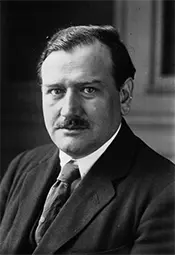

Édouard Daladier
Political Service: 1919 – 1958
Key Roles & Appointments:
1936–1940: Minister of National Defence & War
1938–1940: Prime Minister of France
1940: Minister of Foreign Affairs
Édouard Daladier served as Prime Minister of France during the final years before the outbreak of the Second World War. Returning to office in 1938, he inherited a country facing growing international tension and the expansionist policies of Adolf Hitler's Germany. In September 1938, Daladier signed the Munich Agreement alongside Britain, Italy, and Germany, accepting the transfer of the Sudetenland from Czechoslovakia to Germany. Although the agreement became closely associated with appeasement, Daladier privately doubted Hitler's intentions and viewed it as a means of gaining time for French rearmament. When Germany invaded Poland in September 1939, Daladier honoured France's commitments and declared war alongside Britain. His government oversaw the mobilisation of the French armed forces and the opening phase of the conflict, later known as the Phoney War. Growing political tensions, concerns over military preparedness, and criticism of his government's handling of the war weakened his position, and he resigned in March 1940, being succeeded by Paul Reynaud. Following the German invasion of France in May 1940, Daladier opposed calls for an armistice but was ultimately sidelined by events. After the establishment of the Vichy regime, he was arrested and later handed over to the Germans, spending much of the war in captivity. Liberated by Allied forces in 1945, he returned to political life but never again occupied a position of comparable influence within French government.

Général Charles de Gaulle
Military & Political Service: 1912 – January 1946
Key Commands & Appointments:
1940: 4e Division Cuirassée (Battle of France)
1940: Under-Secretary of State for National Defence
1940–1944: Leader of Free France
1944–1946: Chairman of the Provisional Government of the French Republic
Charles de Gaulle was a French Army officer who came to prominence during the Battle of France in 1940 while commanding the 4th Armoured Division. Following the collapse of French resistance and the signing of the Franco-German Armistice in June 1940, he refused to accept defeat and travelled to Britain. From London, he issued his Appeal of 18th June, urging French soldiers, sailors, airmen, and civilians to continue the fight against Germany rather than accept the authority of the Vichy regime. With British support, de Gaulle established the Free French movement and worked to unite French colonies, military formations, and resistance groups that remained opposed to German occupation. Throughout the war, he sought to preserve French independence within the Allied coalition and ensure that France would be represented among the victorious powers. Free French forces fought alongside Allied armies in North Africa, the Middle East, Italy, and north-west Europe, while de Gaulle frequently clashed with both Winston Churchill and Franklin Roosevelt over France's political future and the restoration of French sovereignty. Following the liberation of Paris in August 1944, de Gaulle entered the city at the head of the Provisional Government of the French Republic. He oversaw the restoration of democratic institutions, the re-establishment of French authority, and the transition from occupation to peace. Although he resigned in January 1946, his wartime leadership helped restore French government and administration after four years of occupation.
Germany
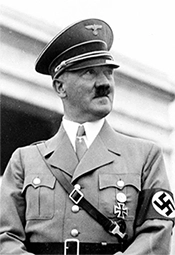

Adolf Hitler
Political & Military Career: 1933 – April 1945
Key Roles & Appointments:
1933–1945: Chancellor of Germany
1934–1945: Führer of Germany & Supreme Commander of the Armed Forces
1938–1945: Head of the High Command of the Armed Forces (OKW)
1941–1945: Commander-in-Chief of the German Army (OKH)
Adolf Hitler became Chancellor of Germany on 30th January 1933 and quickly transformed the country into a one-party dictatorship under Nazi rule. Throughout the 1930s, he oversaw Germany's rearmament, reintroduced conscription, remilitarised the Rhineland, and pursued an aggressive foreign policy that resulted in the annexation of Austria and the occupation of Czechoslovakia. On 1st September 1939, Hitler ordered the invasion of Poland, triggering the outbreak of the Second World War. During the opening years of the conflict, Germany achieved a series of rapid victories in Poland, Scandinavia, Western Europe, and the Balkans. In June 1941, Hitler launched Operation Barbarossa, the invasion of the Soviet Union, turning the war into a vast struggle across Eastern Europe. As the conflict expanded, he increasingly involved himself in military decision-making, often overruling senior commanders and refusing withdrawals even when German forces faced encirclement. At the same time, Nazi policies led to the persecution and murder of millions of civilians across occupied Europe, including the systematic genocide known as the Holocaust. By 1945, Germany was facing defeat on all fronts as Allied armies advanced into the Reich from east and west. Hitler remained in Berlin as Soviet forces fought their way into the city. On 30th April 1945, he committed suicide in the Führerbunker beneath the Reich Chancellery. His death marked the end of Nazi rule and was followed by Germany's unconditional surrender eight days later.
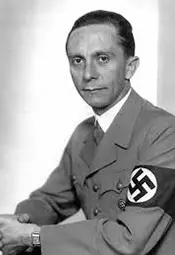
Joseph Goebbels
Political Career: 1924 – May 1945
Key Roles & Appointments:
1926–1945: Gauleiter of Berlin
1933–1945: Reich Minister for Public Enlightenment & Propaganda
1944–1945: Reich Plenipotentiary for Total War
1945: Chancellor of Germany (30th April – 1st May)
Joseph Goebbels served as Reich Minister for Public Enlightenment and Propaganda from 1933 until the collapse of Nazi Germany in 1945. One of Adolf Hitler's closest political allies, he was responsible for controlling the press, radio, film, literature, and cultural life throughout the Third Reich. Through censorship, propaganda campaigns, and mass rallies, Goebbels helped shape public opinion, promote Nazi ideology, and maintain support for the regime during both peace and war. During the Second World War, Goebbels played a central role in sustaining civilian morale as Germany's military situation deteriorated. He became one of the strongest advocates of "total war," calling for the complete mobilisation of German industry, manpower, and resources following major defeats on the Eastern Front. In addition to his propaganda duties, he served as Gauleiter of Berlin and became increasingly involved in organising the capital's defence as Allied bombing intensified and Soviet forces approached the city. Goebbels remained in Berlin during the final battle for the city in April 1945 and stayed loyal to Hitler until the end. Following Hitler's suicide on 30th April, he briefly succeeded him as Chancellor under the terms of Hitler's political testament. The following day, after arranging the deaths of his six children, Goebbels and his wife Magda committed suicide. His career remains closely associated with the propaganda apparatus that supported Nazi rule and the crimes committed by the regime.
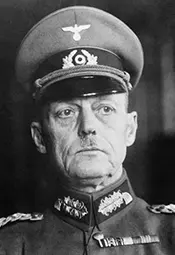
Generalfeldmarschall Gerd von Rundstedt
Military Service: 1892 – March 1945
Key Commands & Appointments:
1939: Army Group South (Poland)
1939–1941: Army Group A (France)
1941: Army Group South (Soviet Union)
1942–1945: Commander-in-Chief West (OB West)
Gerd von Rundstedt was a career officer who became one of Germany's most senior commanders during the Second World War. Recalled from retirement in 1939, he commanded Army Group South during the invasion of Poland and subsequently led Army Group A during the Battle of France in 1940. His forces spearheaded the breakthrough through the Ardennes, helping to isolate Allied armies in Belgium and contributing significantly to the rapid collapse of French resistance. For his role in the campaign, he was promoted to Generalfeldmarschall in July 1940. In 1941, Rundstedt commanded Army Group South during Operation Barbarossa, overseeing the advance into Ukraine and some of the largest encirclement battles of the war, including the capture of hundreds of thousands of Soviet prisoners around Kiev. As German fortunes declined, he repeatedly argued for strategic withdrawals to shorten the front and preserve combat strength, bringing him into conflict with Adolf Hitler. After authorising a retreat from Rostov in late 1941, he was dismissed, though he would later return to senior command. From 1942 onwards, Rundstedt served primarily as Commander-in-Chief West, responsible for Germany's defence in occupied Western Europe. He oversaw German forces during the Normandy Campaign and remained in command during the Battle of the Bulge. Increasingly frustrated by Hitler's interference and Germany's deteriorating military situation, he was dismissed for the final time in March 1945. Captured by Allied forces after the war, he died in 1953.
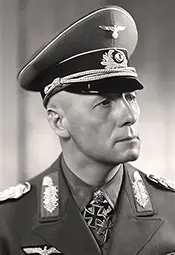
Generalfeldmarschall Erwin Rommel
Military Service: 1910 – October 1944
Key Commands & Appointments:
1939–1940: Commandant of Hitler’s HQ Guard (Führer Begleit-Bataillon)
1940–1941: 7th Panzer Division (Battle of France)
1941–1943: Deutsches Afrika Korps & Panzer Army Afrika
1943–1944: Army Group B (Italy & Western Europe)
Erwin Rommel began the Second World War commanding Hitler's headquarters escort battalion before receiving command of the 7th Panzer Division during the invasion of France in 1940. His division advanced so rapidly that it became known as the "Ghost Division," helping establish his reputation as an aggressive and highly mobile commander. In February 1941, Rommel was sent to North Africa to command the newly arrived Afrika Korps, where he quickly launched a series of offensives that drove British forces back across Cyrenaica. Over the next two years, Rommel directed German and Italian forces during some of the most significant battles of the North African Campaign, including Tobruk, Gazala, Alam Halfa, and both Battles of El Alamein. Promoted to Generalfeldmarschall in June 1942 following the capture of Tobruk, he repeatedly achieved success despite severe logistical difficulties and chronic shortages of fuel, ammunition, and reinforcements. However, growing Allied superiority in manpower, equipment, and air power gradually reversed German fortunes, leading to the Axis withdrawal from North Africa in 1943. Rommel later served in Italy and Western Europe, where he helped oversee the defence of the Atlantic Wall before the Allied invasion of Normandy. As Germany's military position deteriorated, he became increasingly critical of Hitler's leadership and advocated seeking a negotiated end to the war. Although not directly involved in the July Plot, his name became linked to the conspiracy. In October 1944, he was forced to commit suicide in exchange for assurances that his family would not face reprisals.
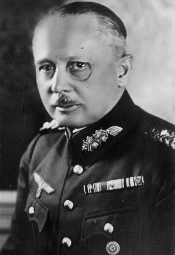
Generaloberst Werner von Fritsch
Military Service: September 1898 – 22nd September 1939
Key Commands & Appointments:
1934–1938: Commander-in-Chief of the German Army
1938–1939: Honorary Colonel of Artillery Regiment 12 (Poland)
Generaloberst Werner von Fritsch was a German Army officer who served on the General Staff during the First World War and continued his career in the Reichswehr. Closely involved in rebuilding Germany’s military strength, he assumes command of the 3rd Infantry Division in 1931 and becomes Commander-in-Chief of the German Army in February 1934. He oversees its rapid expansion and transformation into the Wehrmacht’s land forces, receiving promotion to Generaloberst in 1936. Although Fritsch supports German rearmament and initially welcomes the Nazi regime, he opposes attempts to weaken the Army’s independence and warns that Germany is not yet prepared for a major European war. In February 1938, he is forced to resign after being falsely accused of homosexual conduct during the Blomberg–Fritsch affair. A military court clears him the following month, but he is not restored to command. His removal enables Hitler to reorganise the senior military leadership and strengthen his personal control over the armed forces. Fritsch subsequently becomes honorary colonel of Artillery Regiment 12 and accompanies the regiment during the invasion of Poland, despite holding no operational command. On 22nd September 1939, while observing fighting at Praga on the eastern outskirts of Warsaw, he is struck in the leg by Polish fire. The bullet severs an artery, and Fritsch dies within minutes. Although rumours later claim that he deliberately sought death, eyewitness evidence indicates that he is killed while inspecting the front line.
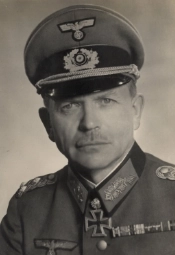
Generaloberst Heinz Guderian
Military Service: February 1907 – March 1945
Key Commands & Appointments:
1939–1940: XIX Motorised Corps (Poland/France)
1940–1941: Panzer Group 2 (Soviet Union)
1943–1945: Inspector-General of Armoured Troops
1944–1945: Acting Chief of the Army General Staff
Generaloberst Heinz Guderian was a German Army officer who served in communications and staff appointments during the First World War. Remaining in the Reichswehr after the conflict, he became a prominent advocate of mechanisation and the concentration of tanks, motorised infantry, artillery and communications within self-contained armoured formations. His ideas help shape Germany’s panzer forces, although his post-war memoirs exaggerate his individual role in their development. During the invasion of Poland in 1939, Guderian commands XIX Motorised Corps before leading it through the Ardennes and across the Meuse at Sedan during the Battle of France. His rapid advance towards the English Channel helps divide the British and French armies and brings him promotion to Generaloberst on 19th July 1940. During Operation Barbarossa, he commands Panzer Group 2, later redesignated the 2nd Panzer Army, in the advances through Minsk and Smolensk and the encirclement of Soviet forces around Kyiv. Following the failure to capture Moscow, disputes with his superiors lead to his dismissal in December 1941. Hitler recalls Guderian in March 1943 as Inspector-General of Armoured Troops, with responsibility for rebuilding Germany’s depleted panzer forces. Appointed acting Chief of the Army General Staff after the failed attempt to assassinate Hitler in July 1944, he oversees operations on the Eastern Front and serves on the military Court of Honour that expels suspected conspirators from the Army, exposing them to prosecution and execution. Increasing disputes with Hitler result in his dismissal on 28th March 1945. Captured by United States forces in May, Guderian is released in 1948 and dies on 14th May 1954.
Italy


Benito Mussolini
Political Career: 1919 – April 1945
Key Roles & Appointments:
1922–1943: Prime Minister of Italy (Duce)
1938–1943: First Marshal of the Empire
1940–1943: Supreme Commander of the Armed Forces
1943–1945: Head of State, Italian Social Republic
Benito Mussolini became Prime Minister of Italy in October 1922 and gradually transformed the country into a Fascist dictatorship. During the 1930s, he pursued an expansionist foreign policy that included the conquest of Ethiopia, intervention in the Spanish Civil War, and increasingly close cooperation with Adolf Hitler's Germany. Although aware of Italy's military and industrial weaknesses, Mussolini aligned Italy with Germany through the Pact of Steel and, following a series of German victories in Western Europe, declared war on Britain and France on 10th June 1940. Italy entered the conflict expecting a short war but soon encountered serious military difficulties. Italian forces suffered setbacks in North Africa, Greece, East Africa, and later on the Eastern Front. Mussolini frequently interfered in military planning and launched campaigns without adequate preparation or resources, placing increasing strain on Italy's armed forces. As the war progressed, Italy became increasingly dependent on German military support, particularly after the arrival of German forces in North Africa and the Balkans. Following the Allied invasion of Sicily in July 1943 and growing dissatisfaction within the Fascist leadership, Mussolini was removed from power by the Fascist Grand Council and arrested on the orders of King Victor Emmanuel III. Rescued by German commandos in September 1943, he became head of the German-backed Italian Social Republic in northern Italy. He remained in this position until April 1945, when he was captured by Italian partisans while attempting to flee towards Switzerland. Mussolini was executed on 28th April 1945, two days before Adolf Hitler's death in Berlin.
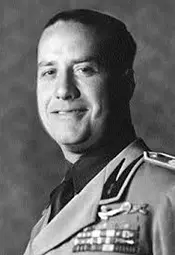
Galeazzo Ciano
Political Career: 1925 – July 1943
Key Roles & Appointments:
1935–1936: Minister of Press & Propaganda
1936–1943: Minister of Foreign Affairs
1943: Member of the Fascist Grand Council
Galeazzo Ciano served as Italy's Minister of Foreign Affairs from 1936 to 1943 and was one of the most influential figures within the Fascist regime. The son-in-law of Benito Mussolini, he rose rapidly through the political ranks and became closely involved in shaping Italy's foreign policy during the years leading up to the Second World War. Ciano played a significant role in strengthening relations with Nazi Germany, including negotiations that contributed to the formation of the Rome-Berlin Axis and the Pact of Steel. Although publicly supportive of Fascist policy, Ciano increasingly questioned both Germany's intentions and Italy's readiness for a major European conflict. His private diaries reveal growing concern over Mussolini's decision-making and provide one of the most important contemporary records of high-level discussions within the Fascist leadership. As the war progressed and Italy suffered military defeats in North Africa, the Mediterranean, and on the Eastern Front, Ciano became increasingly critical of the alliance with Germany and sceptical of Italy's prospects for victory. In July 1943, Ciano voted in favour of the Fascist Grand Council motion that removed Mussolini from power, helping to bring an end to more than twenty years of Fascist rule. After Germany occupied northern Italy and established the Italian Social Republic, he was arrested and charged with treason. Following a highly publicised trial at Verona, Ciano was executed by firing squad on 11th January 1944. His diaries survived the war and remain an important source for historians studying Fascist Italy and the Axis alliance.
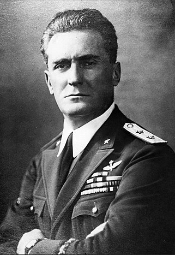
Maresciallo d'Italia Rodolfo Graziani
Military & Political Service: 1903 – April 1945
Key Commands & Appointments:
1939–1940: Chief of Staff of the Italian Army
1940–1941: Commander-in-Chief of North Africa & 10th Army
1940–1941: Governor-General of Italian Libya
1943–1945: Minister of Defence (Italian Social Republic)
Rodolfo Graziani served as Governor-General of Italian East Africa before being appointed Governor-General of Libya and Commander-in-Chief of Italian forces in North Africa. Promoted to Marshal of Italy in 1936, he became responsible for directing Italian operations against British forces following Italy's declaration of war on Britain and France in June 1940. Despite concerns about inadequate transport, limited supplies, and weak logistical support, he came under increasing pressure from Benito Mussolini to launch an offensive into Egypt. In September 1940, Graziani oversaw the Italian invasion of Egypt, with elements of the Italian Tenth Army advancing to Sidi Barrani. The offensive soon stalled, allowing British and Commonwealth forces to launch Operation Compass in December. The campaign rapidly destroyed much of the Italian Tenth Army and resulted in more than 130,000 prisoners being captured. Following the collapse of the Italian position in Cyrenaica, Graziani resigned his command in February 1941 and returned to Italy. For the next two years, Graziani remained outside frontline command while continuing to hold senior military appointments within the Fascist regime. After the Italian Armistice of September 1943, he remained loyal to Mussolini and joined the German-backed Italian Social Republic. Appointed Minister of National Defence in October 1943, he oversaw the rebuilding of Fascist military forces under German supervision and remained in the post until the collapse of the regime in April 1945. Following the war, he was arrested and later imprisoned for collaboration with the Fascist regime.
Japan
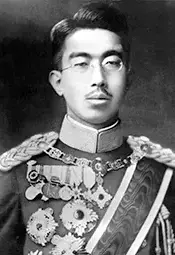

Emperor Hirohito
Reign: 1926 – 1989
Key Roles & Appointments:
1926–1989: Emperor of Japan (Shōwa Emperor)
1926–1945: Supreme Commander of the Imperial Armed Forces
1937–1945: Head of Imperial General Headquarters
Emperor Hirohito served as Emperor of Japan throughout the Second World War and remained the symbolic head of the Japanese state during a period of military expansion across Asia and the Pacific. When war broke out in Europe in 1939, Japan was already engaged in a prolonged conflict with China, and over the following years Japanese forces expanded their operations across East and Southeast Asia. Although political and military decisions were largely made by elected governments and senior military leaders, all major actions were carried out in the Emperor's name. In December 1941, Japan launched attacks against the United States, Britain, and the Netherlands, including the attack on Pearl Harbor. During the following months, Japanese forces captured vast territories across the Pacific and Southeast Asia. As the war turned against Japan after 1942, the country faced increasing military setbacks, heavy bombing, naval defeats, and growing economic hardship. Throughout the conflict, Hirohito continued to receive military briefings and formally approved major strategic decisions taken by the government and armed forces. By the summer of 1945, Japan faced invasion, widespread destruction, and the atomic bombings of Hiroshima and Nagasaki. Following the Soviet declaration of war and invasion of Manchuria, Hirohito supported acceptance of the Allied surrender terms. On 15th August 1945, he announced Japan's surrender in a radio broadcast to the Japanese people. Unlike many wartime leaders, Hirohito remained on the throne after the war and continued as Emperor until his death in 1989.

General Hideki Tojo
Military & Political Service: 1905 – July 1944
Key Roles & Appointments:
1940–1944: Minister of War
1941–1944: Prime Minister of Japan
1944: Chief of the Imperial Army General Staff
Hideki Tojo was a career army officer who became one of Japan's most influential political and military leaders during the Second World War. Having served in a number of senior military posts during the 1930s, he was appointed Prime Minister in October 1941 while also retaining significant influence within the Japanese Army. His government oversaw Japan's decision to go to war against the United States, Britain, and the Netherlands later that year. Under Tojo's leadership, Japan launched the attack on Pearl Harbor in December 1941 and rapidly expanded across Southeast Asia and the Pacific. Early victories brought control of territories stretching from Burma to the Dutch East Indies, but the tide of war gradually turned following defeats at Midway, Guadalcanal, and elsewhere. As military setbacks mounted and Japan's strategic position deteriorated, criticism of Tojo's leadership increased within both the government and armed forces. Following the fall of Saipan in July 1944, Tojo resigned as Prime Minister and was replaced by General Kuniaki Koiso. After Japan's surrender in August 1945, he was arrested by Allied occupation authorities and charged with war crimes. Convicted by the International Military Tribunal for the Far East, he was sentenced to death and executed on 23rd December 1948.
Poland
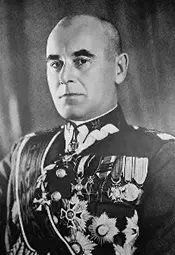

Marshal Edward Rydz-Śmigły
Military Service: 1911 – 1941
Key Commands & Appointments:
1935–1939: General Inspector of the Armed Forces
1939: Commander-in-Chief of the Polish Armed Forces
Marshal Edward Rydz-Śmigły’s military career begins in the Austro-Hungarian Army before joining Józef Piłsudski’s Polish Legions during World War I, where he distinguishes himself in several engagements. After Poland regains independence, he plays a leading role in the Polish–Soviet War, earning national recognition for his leadership. Following Piłsudski’s death in 1935, Rydz-Śmigły becomes General Inspector of the Armed Forces and, in 1936, is elevated to Marshal of Poland, solidifying his status as Piłsudski’s successor. During the Invasion of Poland in September 1939, he serves as Supreme Commander of the Polish Armed Forces. Despite determined resistance, Poland is overwhelmed by the combined German and Soviet assaults. Rydz-Śmigły flees to Romania, later returning secretly to Warsaw under the alias Adam Zawisza. He died of a heart attack on 2nd December 1941 in Nazi-occupied Warsaw. His legacy remains complex — celebrated for his patriotism and service yet criticised for strategic decisions made during Poland’s darkest hour.
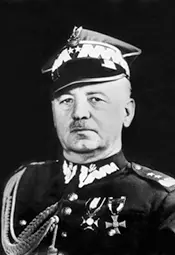
General Władysław Sikorski
Military & Political Service: 1914 – July 1943
Key Commands & Appointments:
1939–1943: Prime Minister of the Polish Government-in-Exile
1939–1943: Commander-in-Chief of the Polish Armed Forces
Władysław Sikorski was a Polish military officer and statesman who became Prime Minister of the Polish government-in-exile following the German and Soviet invasions of Poland in 1939. After the collapse of organised resistance, he established a government in France and later Britain, working to ensure that Poland remained represented within the Allied coalition despite the occupation of its territory by Germany and the Soviet Union. Throughout the war, Sikorski oversaw the formation and expansion of Polish armed forces serving alongside the Western Allies. Polish troops fought in North Africa, Italy, Western Europe, and the Battle of Britain, while Sikorski worked closely with Allied leaders to secure support for Poland's independence and post-war sovereignty. Relations with the Soviet Union became increasingly strained following the discovery of the Katyn massacre in 1943, leading to a breakdown in diplomatic relations between the Polish government-in-exile and Moscow. On 4th July 1943, Sikorski was killed when his aircraft crashed shortly after take-off from Gibraltar. His death removed one of Poland's most prominent wartime leaders at a critical stage of the conflict. The circumstances of the crash remain the subject of debate, but his government continued to represent Polish interests until the end of the war.
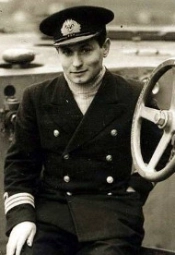
Lieutenant Commander Jan Grudziński
Naval Service: 1928 – June 1940
Key Commands & Appointments:
1939: Executive Officer, ORP Orzeł
1939–1940: Commanding Officer, ORP Orzeł
Lieutenant Jan Grudziński was a Polish naval officer who served aboard torpedo boats and submarines before becoming executive officer of ORP Orzeł in June 1939. Following the German invasion of Poland, the submarine operates in the Baltic under Operation Worek, but repeated German attacks, mechanical problems and the deteriorating health of its commander, Lieutenant Commander Henryk Kłoczkowski, force it to enter the neutral Estonian port of Tallinn on 14th September. After Kłoczkowski is taken ashore for medical treatment and the Estonian authorities begin interning and disarming the submarine, Grudziński assumes command. He helps organise a daring escape during the night of 17th–18th September. Despite having no navigational charts and only six remaining torpedoes, Grudziński and his crew continue patrolling the Baltic before passing through the Danish straits and reaching Britain on 14th October. Operating alongside the Royal Navy from Rosyth, Grudziński commands ORP Orzeł on patrols in the North Sea. On 8th April 1940, the submarine sinks the German transport ship Rio de Janeiro, which is carrying troops and equipment for the invasion of Norway. ORP Orzeł departs on its final patrol on 23rd May and disappears with its entire crew. The submarine is declared lost on 8th June 1940, although the location of its wreck and the precise cause of its loss remain unknown.
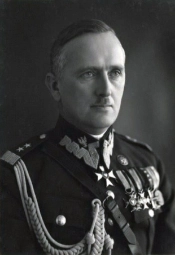
Major General Stefan Dąb-Biernacki
Military Service: 1914 – November 1940
Key Commands & Appointments:
1939: Commanding Officer, Prusy Army
1939: Commander, Northern Front
Major General Stefan Dąb-Biernacki was a Polish Army officer who served in the Polish Legions during the First World War and distinguished himself during the Polish-Soviet War. Awarded three classes of the Virtuti Militari, he later commanded the 1st Legions Infantry Division before becoming an army inspector in 1930. In March 1939, he is appointed commander of the newly formed Prusy Army. During the German invasion of Poland in September 1939, the Prusy Army forms the principal strategic reserve of the Polish high command. Its divisions are still mobilising and assembling when the rapid German advance forces them into action before they can fully concentrate. Committed separately around Piotrków Trybunalski and Radom, its northern and southern groupings suffer heavy defeats against German armoured forces and become dispersed while retreating towards the Vistula. Dąb-Biernacki’s handling of the army and loss of contact with several formations subsequently attract considerable criticism. On 10th September, Dąb-Biernacki assumes command of the newly created Northern Front, comprising remnants of the Prusy Army and other Polish formations east of the Vistula. Following the Soviet invasion on 17th September, he directs his forces south towards Lwów and the Romanian Bridgehead, but they are defeated during the Second Battle of Tomaszów Lubelski. Dąb-Biernacki escapes through Hungary and reaches France, where he receives no further field command. Discharged from military service in November 1940, he remains in exile and dies in London on 9th February 1959.
Soviet Union


Joseph Stalin
Political & Military Career: 1917 – March 1953
Key Roles & Appointments:
1922–1952: General Secretary of the Communist Party
1941–1953: Chairman of the Council of People's Commissars
1941–1945: Chairman of the State Defence Committee (GKO)
1941–1945: Supreme Commander of the Soviet Armed Forces
Joseph Stalin served as leader of the Soviet Union throughout the Second World War. Following the signing of the German-Soviet Non-Aggression Pact in August 1939, the Soviet Union occupied eastern Poland, annexed the Baltic states, and fought the Winter War against Finland. This period ended in June 1941 when Germany launched Operation Barbarossa, bringing the Soviet Union into the war against the Axis powers. As Chairman of the State Defence Committee and Supreme Commander of the Soviet Armed Forces, Stalin directed the Soviet war effort during some of the largest military campaigns in history. Under his leadership, Soviet forces defended Moscow, resisted the German advance at Stalingrad, and launched a series of offensives that gradually pushed the Wehrmacht back across Eastern Europe. Although he frequently intervened in military affairs, Stalin increasingly relied on experienced commanders such as Georgy Zhukov, Aleksandr Vasilevsky, and Konstantin Rokossovsky as the war progressed. By 1945, Soviet armies had advanced into Germany and captured Berlin. Stalin represented the Soviet Union at major Allied conferences with Winston Churchill and Franklin Roosevelt, helping shape plans for post-war Europe. Following Germany's surrender in May 1945, Soviet forces also participated in the defeat of Japan. Stalin remained leader of the Soviet Union after the war and continued to govern until his death in 1953.

Marshal Semyon Timoshenko
Military Service: 1914 – 1960
Key Commands & Appointments:
1940–1941: People's Commissar for Defence
1941–1942: Commander, Western & South-Western Fronts
1942–1943: Commander, North-Western Front
1943–1945: Representative of the Headquarters of the Supreme Command
Semyon Timoshenko was a Soviet military commander who held a number of senior appointments before and during the Second World War. Following Soviet successes during the Winter War against Finland, he was appointed People's Commissar for Defence in 1940 and became responsible for overseeing the expansion and reorganisation of the Red Army during a period of growing international tension. When Germany launched Operation Barbarossa in June 1941, Timoshenko commanded Soviet forces on several key sectors of the front and played an important role during the desperate fighting of the war's opening months. Although a number of offensives under his command met with mixed success, he remained a trusted member of the Soviet High Command and continued to direct major formations throughout the conflict. As the Red Army recovered from its early defeats, Timoshenko increasingly served as a representative of Stavka, coordinating operations across multiple fronts. During the later stages of the war, Timoshenko supervised Soviet operations in Eastern Europe and the Balkans as Soviet armies advanced towards Germany. Following the Allied victory in 1945, he remained in military service and continued to hold senior positions within the Soviet armed forces. He retired from active duty in 1960 and died in 1970.
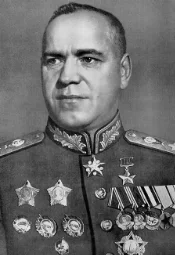
Marshal Georgy Zhukov
Military Service: 1915 – 1957
Key Commands & Appointments:
1941: Chief of the General Staff of the Red Army
1942–1945: Deputy Supreme Commander of the Red Army
1944–1945: Commander, 1st Belorussian Front
Georgy Zhukov was a senior Soviet Army commander who rose to prominence before the Second World War following his victory over Japanese forces at the Battle of Khalkhin Gol in 1939. Promoted to Chief of the General Staff in 1941, he became one of the Soviet Union's most important military leaders during the German invasion. Following the launch of Operation Barbarossa in June 1941, Zhukov played a key role in organising the defence of Moscow and helping to halt the German advance on the Soviet capital. Over the following years, Zhukov held a series of senior commands and was involved in many of the Soviet Union's most important victories, including Stalingrad, Kursk, Operation Bagration, and the great offensives that drove German forces out of Eastern Europe. Working closely with Stalin and the Soviet High Command, he coordinated large-scale operations involving millions of troops across the Eastern Front and became one of the principal architects of the Soviet advance towards Germany. In 1945, Zhukov commanded the 1st Belorussian Front during the final assault on Berlin and accepted Germany's unconditional surrender on behalf of the Soviet Union. Following the war, he continued to serve in senior military and political positions, including a period as Minister of Defence. Although his relationship with the Soviet leadership fluctuated after the war, he remained one of the most recognised Soviet commanders of the conflict until his retirement in 1957.
United Kingdom
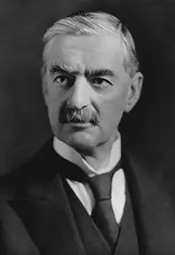

Neville Chamberlain
Political Service: 1918 – October 1940
Key Roles & Appointments:
1937–1940: Prime Minister of the United Kingdom
1940: Lord President of the Council
Neville Chamberlain served as Prime Minister of the United Kingdom from 1937 until May 1940 during a period of growing international tension and the opening months of the Second World War. During the late 1930s, he pursued a policy of negotiation with Germany in an effort to avoid another major European conflict while Britain continued to strengthen its armed forces. This policy culminated in the Munich Agreement of September 1938, which transferred the Sudetenland from Czechoslovakia to Germany. Following Germany's invasion of Poland in September 1939, Chamberlain declared war on Germany and led Britain during the opening phase of the conflict. His government oversaw the mobilisation of British forces and the early campaigns of the war, including operations in Norway. Military setbacks and growing criticism of his leadership weakened his position in Parliament, particularly after the failure of the Norwegian campaign in 1940. On 10th May 1940, the day Germany launched its offensive against France and the Low Countries, Chamberlain resigned and was succeeded by Winston Churchill. He remained in the War Cabinet for several months and continued to support the wartime government until ill health forced his retirement. Chamberlain died in November 1940, six months after leaving office.
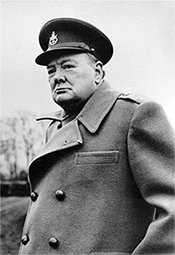
Winston Churchill
Political Service: 1900 – 1964
Key Roles & Appointments:
1939–1940: First Lord of the Admiralty
1940–1945: Prime Minister of the United Kingdom
1940–1945: Minister of Defence
Winston Churchill became Prime Minister of the United Kingdom on 10th May 1940, succeeding Neville Chamberlain during the German invasion of Western Europe. Having previously served in a variety of military and political roles, he entered office at a time when Britain faced the prospect of defeat following the collapse of France. Churchill rejected proposals for negotiations with Germany and committed Britain to continuing the war alongside the Commonwealth and, later, the Soviet Union and the United States. Throughout the war, Churchill directed British strategy in close cooperation with Allied leaders including Franklin Roosevelt and Joseph Stalin. He played a central role in major wartime conferences and was heavily involved in decisions concerning the Mediterranean, North Africa, Italy, and the invasion of Western Europe. Under his leadership, Britain endured the Blitz, fought the Battle of the Atlantic, and contributed to Allied victories across multiple theatres of war. By 1945, Allied forces had liberated much of Europe and Germany was approaching defeat. Despite his wartime leadership, Churchill's Conservative Party was defeated in the July 1945 General Election and he left office shortly before the end of the war against Japan. He later returned as Prime Minister from 1951 to 1955 and remained an influential figure in British and international politics until his retirement.
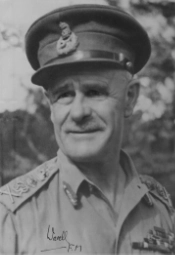
Field Marshal Archibald Wavell
Military & Political Service: 1901 – 1947
Key Commands & Appointments:
1939–1941: Commander-in-Chief, Middle East Command
1941–1943: Commander-in-Chief, India
1943–1947: Viceroy and Governor-General of India
Archibald Wavell was one of Britain's most respected senior commanders of the Second World War and oversaw British military operations throughout the Middle East during the critical early years of the conflict. Appointed Commander-in-Chief Middle East shortly before the outbreak of war, he was responsible for a vast theatre stretching from North Africa and the Mediterranean to East Africa and the Middle East. Despite severe shortages of men, aircraft, tanks, and supplies, Wavell adopts an aggressive strategy designed to exploit British mobility and initiative against the Axis powers. Under his overall command, British and Commonwealth forces achieved a series of remarkable victories between 1940 and 1941. These included Operation Compass in North Africa, which destroyed the Italian Tenth Army, the successful campaign against Italian East Africa, and the defeat of pro-Axis forces in Iraq. Working closely with commanders such as Richard O'Connor, Wavell directed operations that secured Egypt, captured Cyrenaica, and establish British dominance across much of the region during the opening phase of the war. The arrival of General Erwin Rommel and the diversion of forces to Greece placed increasing pressure on British resources, leading to setbacks in North Africa during 1941. Wavell is subsequently transferred to India, where he serves as Commander-in-Chief, India, before becoming Viceroy of India in 1943. Promoted to Field Marshal on 3rd June 1943, he remains one of Britain's most capable strategic commanders and is remembered for overseeing some of the most successful British campaigns of the early war years.
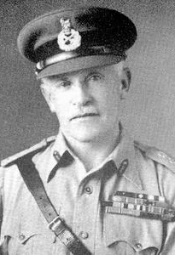
General Sir Richard O'Connor
Military Service: 1900 – 1948
Key Commands & Appointments:
1940–1941: Commander, Western Desert Force / XIII Corps
1944: Commander, VIII Corps (Normandy Campaign)
1945: General Officer Commanding-in-Chief, Eastern Command
General Richard O'Connor was one of Britain's most distinguished field commanders of the Second World War. A veteran officer of the First World War, he commanded the Western Desert Force following Italy's entry into the war in June 1940. Faced with a much larger Italian army in North Africa, O'Connor developed an aggressive operational doctrine based on speed, surprise, and the effective coordination of armour, infantry, artillery, and air power. His leadership transformed a small defensive force into a highly mobile striking formation capable of taking the offensive against a numerically superior enemy. In December 1940, O'Connor launched Operation Compass, initially conceived as a limited raid against Italian positions in Egypt. Exploiting weaknesses in the Italian deployment, the operation rapidly expanded into a sweeping offensive across Cyrenaica. Under his command, British and Commonwealth forces captured Sidi Barrani, Bardia, Tobruk, Derna, and Benghazi before cutting off and destroying the retreating Italian Tenth Army at Beda Fomm in February 1941. The campaign resulted in the capture of more than 130,000 prisoners and stands as one of the most decisive British victories of the war. In April 1941 O'Connor was captured by German forces while travelling near the front during the opening stages of General Erwin Rommel's first offensive in Cyrenaica. He spent more than two years as a prisoner of war before escaping from captivity in Italy following the Italian armistice in 1943. Returning to active service, he commanded VIII Corps during the Normandy Campaign and led other formations in north-west Europe during the final stages of the war. Promoted to General in April 1945, O'Connor earned a reputation as one of Britain's most capable and successful commanders of the Second World War.
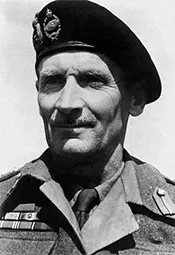
Field Marshal Bernard Law Montgomery
Military Service: 1908 – 1958
Key Commands & Appointments:
1942–1943: Commander, British Eighth Army
1944–1945: Commander, 21st Army Group
1946–1948: Chief of the Imperial General Staff
Bernard Law Montgomery was a British Army officer who commanded the 3rd Infantry Division during the Battle of France in 1940 and the evacuation from Dunkirk. Following a series of senior appointments in Britain, he was appointed commander of the British Eighth Army in August 1942 during a critical stage of the North African Campaign. Upon taking command, Montgomery reorganised the army, strengthened training and morale, and prepared it for a renewed offensive against Axis forces under Erwin Rommel. In October 1942, Montgomery directed the Eighth Army during the Second Battle of El Alamein, which halted the Axis advance into Egypt and began a sustained Allied offensive across North Africa. He subsequently led the Eighth Army during the invasions of Sicily and mainland Italy before being appointed commander of the 21st Army Group for the invasion of Normandy in 1944. In this role, he oversaw British and Canadian forces during the liberation of France, Belgium, and the Netherlands. During the final year of the war, Montgomery commanded Allied forces in several major operations, including Operation Market Garden and the advance into northern Germany. On 4th May 1945, he accepted the surrender of German forces in north-west Europe at Lüneburg Heath. Following the war, Montgomery continued to serve in senior military appointments before retiring from active service in 1958.
United States
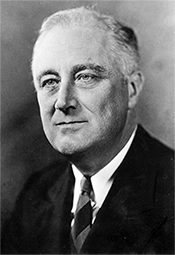

Franklin D. Roosevelt
Presidency: 1933 – April 1945
Key Roles & Appointments:
1933–1945: President of the United States
1933–1945: Commander-in-Chief of the U.S. Armed Forces
Franklin D. Roosevelt served as President of the United States throughout most of the Second World War. During the early years of the conflict, while the United States remained officially neutral, he supported Britain and other Allied nations through measures such as Lend-Lease, providing military equipment, supplies, and financial assistance. Roosevelt also worked to strengthen American armed forces as international tensions continued to grow. Following the Japanese attack on Pearl Harbor on 7th December 1941, Roosevelt led the United States into the war against Japan, Germany, and Italy. Throughout the conflict, he worked closely with Winston Churchill and Joseph Stalin to coordinate Allied strategy and oversee the mobilisation of America's vast industrial and military resources. Under his leadership, the United States played a central role in campaigns across North Africa, Europe, the Atlantic, and the Pacific. Roosevelt attended a series of major Allied conferences, including those at Casablanca, Tehran, and Yalta, where plans for the final defeat of the Axis powers and the post-war world were discussed. On 12th April 1945, with Allied victory approaching, he died while still in office and was succeeded by Harry S. Truman. Germany surrendered less than a month later, followed by Japan in September 1945.
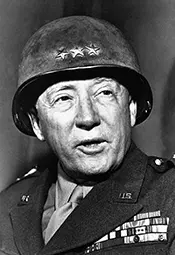
General George S. Patton
Military Service: 1909 – 1945
Key Commands & Appointments:
1942: Commander, I Armored Corps (Operation Torch)
1943: Commander, U.S. Seventh Army
1944–1945: Commander, U.S. Third Army
George S. Patton was a United States Army officer who became one of America's most prominent field commanders during the Second World War. Following the entry of the United States into the conflict, he commanded American forces during Operation Torch, the Allied landings in North Africa in November 1942. Patton subsequently played a key role in restoring discipline and combat effectiveness within the U.S. Army following the setbacks experienced during the Tunisian Campaign. In 1943, Patton commanded the U.S. Seventh Army during the invasion of Sicily, where his forces rapidly advanced across the island and captured Palermo and Messina. Following the Normandy landings in June 1944, he took command of the U.S. Third Army and led a series of fast-moving offensives across France. His forces were instrumental in the breakout from Normandy, the liberation of large areas of France, and the relief of Allied troops surrounded at Bastogne during the Battle of the Bulge. During the final months of the war, Patton's armies crossed the Rhine and advanced deep into Germany and Czechoslovakia. Following Germany's surrender in May 1945, he remained in Europe as part of the Allied occupation forces. Later that year, he suffered severe injuries in a motor vehicle accident and died on 21st December 1945 in Heidelberg, Germany.