The Road to War Overview
In January 1933, Adolf Hitler’s appointment as Chancellor marked a decisive break with Europe’s fragile post-war stability. Over the following years, the political atmosphere shifted rapidly as the Nazi regime dismantled democratic institutions, rearmed in defiance of the Versailles settlement, and sought to reshape Europe through force and ideology. What followed was a gathering storm across the continent: a steady erosion of diplomacy, a rise in militarism, and a growing conviction within Berlin that the order created after 1919 could be overturned by bold action.
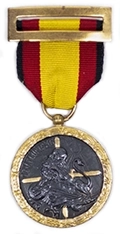
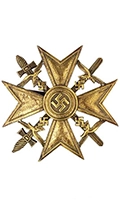
European governments struggled to contain the unfolding crisis. Italy pursued its own imperial ambitions, invading Abyssinia in 1935 in a display of aggression that exposed the weakness of the League of Nations. The Spanish Civil War drew in foreign powers and became a proving ground for new weapons and tactics. Meanwhile in Asia, Japan tightened its grip on Manchuria and pushed deeper into China after 1937, revealing how fragile the international system had become. Across two continents, restraint gave way to confrontation, and the old architecture of collective security fractured beyond repair.
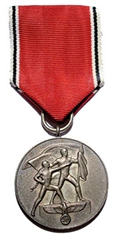
By the late 1930s, Germany accelerated its course. The remilitarisation of the Rhineland, the Anschluss with Austria, and the partition of Czechoslovakia showed how rapidly the strategic landscape was changing. Each move tested the resolve of Britain and France, and each was met with hesitation. When Poland was attacked on 1st September 1939, it became clear that the storm gathering over Europe had broken into open war. British and French declarations of war followed within days, marking the moment when six years of political brinkmanship turned into a global conflict.
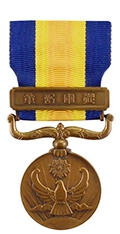
Yet the road to war did not run only through Europe. In Asia, events followed their own trajectory as Japan’s power and ambition expanded — an era shaped by the rising sun of an increasingly assertive empire. The long war in China, the move into French Indochina in 1940, and mounting friction with British, Dutch, and American interests brought Tokyo into direct confrontation with the Western powers. Economic embargoes — especially the American oil cutoff of 1941 — left Japan facing a stark strategic choice. By the end of that year, diplomacy had given way to calculation and risk, and the crisis in the Pacific had fused with events in Europe, ensuring that the conflict ahead would become global in both scale and consequence.