Introduction to Medals and Badges
World War 2 medals and badges were more than just pieces of metal — they were powerful symbols of honor, sacrifice, and recognition. During the global conflict of 1939–1945, every major nation created military decorations to reward extraordinary bravery, long service, or participation in specific campaigns. Soldiers, sailors, airmen, and even civilians received awards that reflected their courage under fire, their loyalty to their country, and their vital contributions to the war effort. These WWII medals and badges remain enduring reminders of the human cost and heroism of the Second World War.
This section explores a wide collection of World War II military awards, grouped by country for easy reference. From the Victoria Cross of the United Kingdom and the Medal of Honor of the United States to German campaign medals, Soviet orders, French crosses, and Finnish battle clasps, each decoration tells a story of service and sacrifice. Whether awarded for gallantry in combat, defence of a homeland, or long and faithful duty, these decorations of 1939–1945 highlight how nations recognized the individuals who shaped the outcome of the war.
Australia

Service Medal 1939–1945
Service Medal
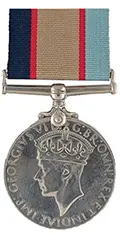
Established: 1949 (awarded for 1939–1945 service)
Eligibility: Australian military personnel who served within Australia or specified territories during World War II but did not qualify for overseas campaign awards
The Australia Service Medal 1939–1945 was awarded to Australian military personnel who served within Australia and its territories during World War II. It recognised essential home defence, training, and support roles undertaken by those who did not qualify for overseas campaign medals but contributed to the overall war effort.
Belgium

Prisoner of War Medal 1940–1945
Service Medal
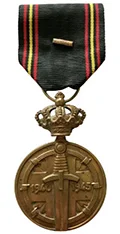
Established: 1947
Eligibility: Belgian military personnel who were held as prisoners of war during World War II
The Prisoner of War Medal 1940–1945 was instituted after the war to recognise Belgian military personnel who were captured and held by German forces. It honoured the endurance and sacrifice of those who spent extended periods in captivity, reflecting national recognition of their hardship and continued loyalty during occupation.
Denmark

King Christian X Liberty Medal
Commemorative Medal
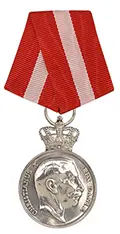
Established: 24th May 1946
Eligibility: Danish citizens and foreign nationals who contributed to Denmark’s liberation, including members of the resistance movement and Allied personnel
The King Christian X Liberty Medal was instituted in 1945 to recognise Danish citizens and foreign nationals who contributed to Denmark’s liberation from German occupation. It was awarded to members of the resistance movement, saboteurs, and Allied personnel whose actions supported the restoration of Danish independence between 1940 and 1945.
Finland

Summa Cross 1939–1940
Campaign Clasp
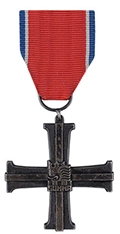
Established: 1940
Eligibility: Participation in the Battle of Summa
The Summa Cross was a campaign clasp awarded in conjunction with Finland’s Winter War Medal to personnel who served in the heavily contested Summa sector of the Karelian Isthmus. It recognised participation in some of the fiercest defensive battles of 1939–1940, where Finnish forces resisted repeated Soviet offensives under extreme conditions.
Suomussalmi Clasp 1939–1940
Campaign Clasp

Established: 1940
Eligibility: Participation in the Battle of Suomussalmi
The Suomussalmi Clasp was awarded as part of the Winter War Medal to Finnish personnel who took part in the Battle of Suomussalmi. It commemorated one of Finland’s most significant victories, where Finnish troops encircled and destroyed Soviet forces using mobility, local knowledge, and effective winter warfare tactics.
Middle Isthmus Cross 1939–1940
Campaign Clasp
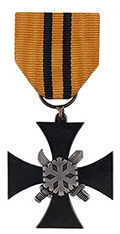
Established: 1940
Eligibility: Service on the Middle Karelian Isthmus sector
The Middle Isthmus Cross was a campaign clasp awarded with the Winter War Medal to those who served on the central sector of the Karelian Isthmus. It recognised participation in sustained defensive operations during the Winter War, where Finnish forces endured intense Soviet pressure in one of the conflict’s most critical sectors.
France

French Resistance Medal
Military & Civilian Decoration
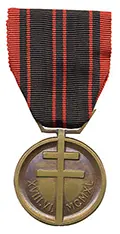
Established: 9th February 1943
Eligibility: Individuals who significantly aided the French Resistance
The French Resistance Medal was established by General Charles de Gaulle in 1943 to honour individuals who played a significant role in the French Resistance. It recognised acts of courage, leadership, and sacrifice by those who opposed German occupation and the Vichy regime, both within France and in support of the Free French movement.
Legion of Honour
National Order
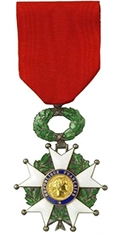
Established: 1802 (awarded during WW2)
Eligibility: French citizens and foreigners for eminent merit
The Legion of Honour, established by Napoleon in 1802, remained France’s highest national order during World War II. It was awarded for outstanding military or civil service to the nation, recognising exceptional bravery, leadership, and achievement by both French citizens and foreign allies.
Commemorative Medal of the War 1939–1945
Commemorative Medal
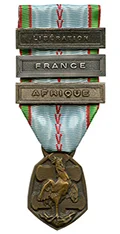
Established: 1946
Eligibility: Military/civil service contributing 1939–1945
The Commemorative Medal of the War 1939–1945 was instituted in 1946 and awarded to members of the French armed forces, Free French units, and certain civilians who completed qualifying service during the Second World War. It symbolised national recognition of participation in the defence and liberation of France.
Croix de Guerre 1939–1945
Military Decoration
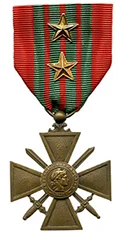
Established: 26th September 1939
Eligibility: French and Allied military personnel mentioned in despatches for acts of bravery
The Croix de Guerre 1939–1945 was awarded to French and Allied personnel who were cited for acts of bravery in combat during World War II. Decorations such as stars and palms on the ribbon indicated the level of the citation, ranging from regimental to army command, making it one of France’s most recognisable wartime honours.
Volunteer Combatants’ Cross
Service/Gallantry Cross
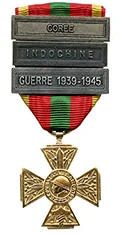
Established: 4th July 1935
Eligibility: Granted to volunteers who enlisted in combat units, either in France or with the Free French Forces, and actively engaged in fighting the enemy.
The Volunteer Combatants’ Cross was awarded to individuals who voluntarily enlisted for frontline combat service during World War II. Extended from earlier versions, it recognised those who chose to fight, including members of the Free French Forces and Resistance, symbolising personal commitment and courage in active operations.
Aeronautical Medal
National Merit (Aviation)
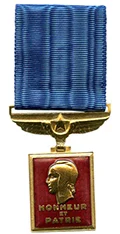
Established: 14th February 1945
Eligibility: Awarded to military or civilian personnel who made exceptional contributions to aviation, including flight operations, aeronautical engineering, research, or leadership.
The Aeronautical Medal was established in 1945 to recognise exceptional contributions to aviation by military and civilian personnel. Awarded for courage in flight, technical achievement, or leadership, it honoured those who advanced French and Allied air power during and after World War II.
Commemorative Medal for Voluntary Service in Free France
Commemorative Medal
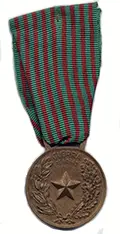
Established: 4th April 1946
Eligibility: Volunteers who served in Free French forces before 1st August 1943
The Commemorative Medal for Voluntary Service in Free France was instituted in 1946 to honour individuals who joined the Free French Forces before 1 August 1943. It recognised those who chose to continue the fight after France’s defeat in 1940, often at great personal risk, and symbolised early commitment to national liberation.
Germany

Memel Medal
Commemorative Medal
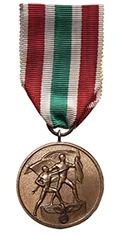
Established: 1st May 1939
Eligibility: German military personnel and civilians who participated in or contributed to the annexation of the Memel territory
The Memel Medal was instituted in May 1939 to honour military, political, and civil personnel who took part in the bloodless annexation of the Memel (Klaipėda) territory from Lithuania. It represented the final stage of Germany’s pre-war territorial expansion and followed earlier awards for Austria and the Sudetenland campaigns.
Sudetenland Medal
Commemorative Medal
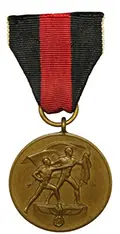
Established: 18th October 1938
Eligibility: Awarded to German armed forces, police, and civil personnel who took part in the annexation of the Sudetenland.
The Sudetenland Medal was instituted in October 1938 to recognise German armed forces, police, and civil personnel involved in the occupation of Czechoslovakia’s border regions. Awarded following the Munich Agreement, it commemorated the incorporation of the Sudetenland into the Reich and became one of the regime’s prominent pre-war “Flower Wars” decorations.
Danzig Cross (Danziger Kreuz)
Political Decoration
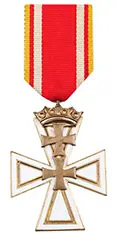
Established: 31st August 1939
Eligibility: Individuals who contributed to the consolidation and promotion of National Socialist control in the Free City of Danzig
The Danzig Cross was created by the Nazi-controlled government of the Free City of Danzig to recognise supporters who helped strengthen National Socialist influence in the territory. Issued in two classes, it became one of the region’s principal political honours shortly before Danzig's incorporation into the German Reich in 1939.
Knight’s Cross of the Iron Cross
Highest Gallantry Decoration
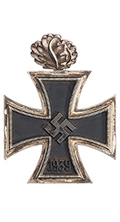
Established: 1939
Eligibility: Extraordinary battlefield bravery/leadership
The Knight’s Cross of the Iron Cross formed the central high grade of the Iron Cross series under the Wehrmacht, awarded for extraordinary courage or highly successful command in combat. Bestowed upon personnel of all services, it became synonymous with elite battlefield achievement and was issued in several progressively higher classes.
Grand Cross of the Iron Cross
High Command Award
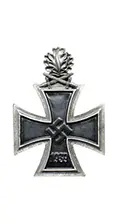
Established: 1939 (revived)
Eligibility: Senior commanders for decisive victories
The Grand Cross of the Iron Cross was the highest grade of the Iron Cross system in Nazi Germany, reserved for senior commanders who achieved decisive strategic victories. Revived in 1939, it was awarded only once during World War II and this was to Hermann Göring in July 1940, underscoring its status as an exceptionally rare theatre-level command decoration.
Panzer Badge
Battlefield Badge
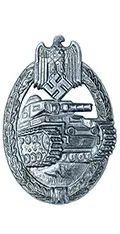
Established: 20th December 1939
Eligibility: Panzer crew with confirmed combat participation
The Panzer Badge recognised armoured troops who participated in frontline tank engagements and demonstrated sustained combat service. Awarded primarily to Panzer crew members, it became one of the most widely issued German battlefield badges, with higher grades introduced to denote repeated armoured combat operations.
Luftwaffe Air Crew Badge
Qualification Badge
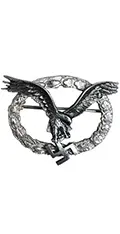
Established: Mid-1930s
Eligibility: Completion of aircrew training/qualification
The Luftwaffe Air Crew Badge signified successful completion of flight training and qualification as a pilot, observer, or aircrew member. Worn on the left breast, it marked entry into operational flying status and became a standard qualification emblem for personnel serving in Germany’s rapidly expanding wartime air arm.
Luftwaffe Radio Operator & Air Gunner Badge
Qualification Badge
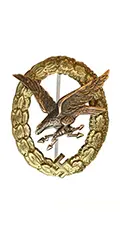
Established: 1935
Eligibility: Qualified radio operators/air gunners with ops service
The Luftwaffe Radio Operator and Air Gunner Badge recognised enlisted aircrew who qualified in airborne communications and defensive gunnery roles. Awarded after training and operational service, it acknowledged the technical skill and combat contribution of specialist crew members essential to German air operations.
Anti-Aircraft Flak Battle Badge
Battle Badge
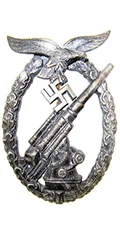
Established: 1941
Eligibility: Luftwaffe flak crews with verified engagement/points
The Anti-Aircraft Flak Battle Badge was awarded to Luftwaffe personnel serving in anti-aircraft artillery units who demonstrated effective combat performance. Often issued on a points-based system tied to confirmed engagements, it recognised the vital role of flak crews in defending German forces and cities from Allied air attack.
Wehrmacht Long Service Award
Long Service Award
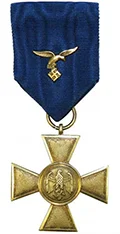
Established: 1936
Eligibility: Wehrmacht personnel meeting service thresholds
The Wehrmacht Long Service Award was a series of decorations recognising extended and faithful military service within Germany’s armed forces. Issued in multiple classes based on years served, it honoured career commitment rather than battlefield achievement and was worn by many professional soldiers during the early war years.
West Wall Medal
Commemorative/Service Medal
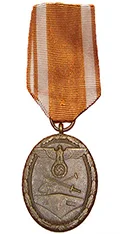
Established: 1939 (reissued 1944)
Eligibility: Construction/defence of the West Wall
The West Wall Medal commemorated military personnel, labourers, and officials who contributed to the construction and later defence of the West Wall (Siegfried Line). First issued in 1939 and reintroduced in 1944, it recognised the massive effort to fortify Germany’s western frontier against potential Allied invasion.
Order of the German Eagle (Cross)
Diplomatic Order
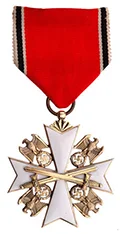
Established: 1937
Eligibility: Primarily foreign dignitaries and diplomats
The Order of the German Eagle was primarily a diplomatic decoration awarded to foreign diplomats, military officers, and political figures who rendered services favourable to the German Reich. Issued in several grades of crosses and stars, it served as an important instrument of Nazi Germany’s foreign policy and prestige diplomacy.
Anschluss Medal
Commemorative Medal
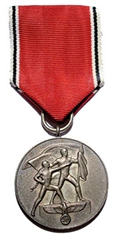
Established: 1938
Eligibility: Participants/supporters of Austria’s annexation
The Anschluss Medal commemorated the annexation of Austria into the German Reich in March 1938 and was awarded to military, political, and civil participants in the operation. It became the first of the regime’s so-called “Flower Wars” decorations marking Germany’s early territorial expansions without major combat.
Condor Legion Medal
Campaign/Service Medal
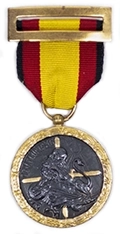
Established: 1939
Eligibility: Condor Legion personnel in Spain
The Condor Legion Medal recognised German military personnel who served with the Condor Legion in support of Franco’s Nationalist forces during the Spanish Civil War. It honoured both combat and support roles and reflected the conflict’s importance as a testing ground for German air and armoured warfare doctrine.
Spanish Cross (with Swords)
Combat Decoration
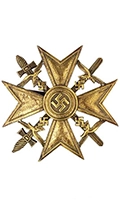
Established: 1939
Eligibility: Condor Legion personnel with combat distinction
The Spanish Cross with Swords was awarded to members of the Condor Legion who distinguished themselves in combat during the Spanish Civil War. Issued in several grades, the swords device specifically denoted frontline service, recognising the operational experience gained by German air and ground forces in Spain.
War Merit Cross 2nd Class (without Swords)
Service Merit Cross
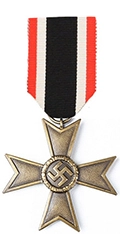
Established: 1939
Eligibility: Exceptional non-combat wartime service
The War Merit Cross 2nd Class without Swords recognised significant contributions to the German war effort by military personnel and civilians not engaged in direct combat. It honoured administrative, industrial, and logistical achievements considered vital to sustaining Germany’s overall wartime capability.
Auxiliary Cruiser Badge
Kriegsmarine War Badge
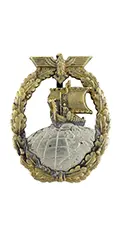
Established: April 1941
Eligibility: Kriegsmarine personnel serving on auxiliary cruisers (commerce raiders)
The Auxiliary Cruiser Badge was a German naval decoration awarded to crew members of auxiliary cruisers and their support vessels who participated in successful long-range commerce raiding missions during World War II. It featured a Viking-style ship and was worn on the left breast uniform pocket.
Mountain Guide Badge
Qualification Badge
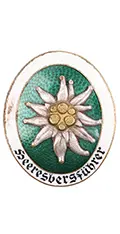
Established: Circa 1942
Eligibility: Qualified mountain guides in German Army Gebirgsjäger units
The Mountain Guide Badge was a Wehrmacht qualification awarded to trained mountain guides in the German Army’s Gebirgsjäger divisions. It recognized advanced alpine skills and service leading troops through difficult mountain terrain, especially in Norway, the Alps, and the Balkans.
War Merit Cross 2nd Class (with Swords)
Military Decoration
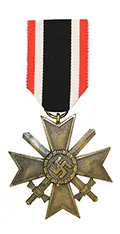
Established: 18th October 1939
Eligibility: German military personnel for merit in combat-related service not involving direct frontline combat
The War Merit Cross 2nd Class with Swords was instituted by Nazi Germany during World War II to honor military personnel who showed exemplary service in support roles under combat conditions. It was distinguished from the version without swords, which was for non-combat contributions.
Medal for the Winter Battle in the East 1941/42
Military Decoration
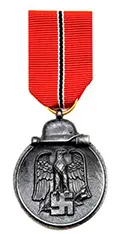
Established: 26th May 1942
Eligibility: Wehrmacht and Waffen-SS personnel, along with certain Axis allies, who served on the Eastern Front between 15th November 1941 and 15th April 1942
The Medal for the Winter Battle in the East 1941/42, or Ostmedaille, was awarded by Germany to recognize Wehrmacht and Axis personnel fighting on the Eastern Front during the winter of 1941/42. Soldiers mockingly referred to it as the "Frozen Meat Medal" due to the extreme winter hardships.
Coburg Badge (Coburger Abzeichen)
Political Honour Badge
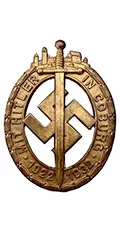
Established: 14th October 1932
Eligibility: Verified Nazi Party participants in the “German Day in Coburg” events of October 1922
The Coburg Badge was one of the earliest and most exclusive Nazi Party honours. It was awarded to members who took part in the violent confrontations in Coburg in October 1922, an event later mythologised by the regime as a key moment in its early struggle. Holders were granted high prestige within the party due to the badge’s limited and historically symbolic eligibility.
Greece

Royal Hellenic Navy Campaign Cross
Campaign Cross
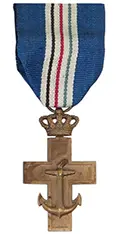
Established: 1940s (wartime/post-war issue)
Eligibility: Royal Hellenic Navy personnel for operational and campaign service
Awarded to officers and sailors of the Royal Hellenic Navy for participation in naval operations during World War II, particularly in the Mediterranean following the Axis invasion of Greece. It recognised both combat action and sustained service at sea in support of Allied naval efforts.
Italy

War Liberation Medal
Campaign Medal
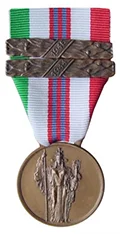
Established: 1946
Eligibility: Italian military personnel who served with co-belligerent or partisan forces in the liberation of Italy (1943–1945)
The War Liberation Medal was instituted by the post-Fascist Italian government to recognise military personnel who contributed to the liberation of Italy from German occupation and Fascist forces between 1943 and 1945. It honoured those who fought alongside Allied armies or served in recognised Italian co-belligerent formations.
Italian Expeditionary Corps in Russia Medal
Campaign Medal
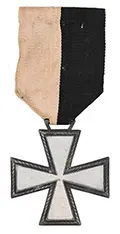
Established: Post-war (commemorative issue)
Eligibility: Veterans of the CSIR and Italian 8th Army who served on the Eastern Front
This commemorative medal was issued to veterans of the Corpo di Spedizione Italiano in Russia (CSIR) and the later Italian 8th Army who served on the Eastern Front alongside German forces. It reflects the harsh conditions of the Russian campaign and the heavy losses suffered, particularly during the winter of 1942–1943, and serves as a post-war recognition of their service.
Medal for Volunteers of the War 1940-1945
Campaign/Service Medal
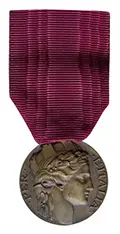
Established: 1948
Eligibility: Italian citizens who voluntarily enlisted and served honourably in the armed forces between 1940 and 1945
The Medal for Volunteers of the War 1940–1945 was instituted by the Italian Republic to honour individuals who voluntarily entered military service during World War II. Awarded regardless of former alignment, it recognised honourable wartime service between 1940 and 1945 and symbolised Italy’s post-war effort at national reconciliation.
National Security Volunteer Militia Long-Service Cross
Service Decoration
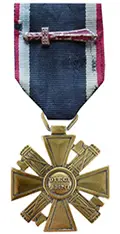
Established: 1923 (Fascist period)
Eligibility: Members of the Milizia Volontaria per la Sicurezza Nazionale (MVSN), awarded for long and faithful service, with clasps marking additional years of duty.
The National Security Volunteer Militia Long-Service Cross was awarded to members of the Milizia Volontaria per la Sicurezza Nazionale (MVSN), the Fascist-era Blackshirt militia, in recognition of extended and faithful service. Additional clasps indicated further years of duty, marking sustained commitment within the regime’s paramilitary and political structure.
Croce al Merito di Guerra (War Merit Cross)
Military Merit Decoration
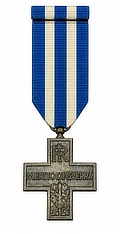
Established: 19th January 1918
Eligibility: Italian military personnel recognised for meritorious wartime service, campaign participation, or sustained service under war conditions.
The Croce al Merito di Guerra (War Merit Cross) was awarded by the Kingdom of Italy to military personnel who rendered distinguished wartime service or participated in military operations under qualifying conditions. During World War 2 it was awarded to members of the Italian armed forces in recognition of meritorious service performed in the face of the enemy or under wartime conditions.
Japan

Greater East Asia War Medal
Campaign Medal
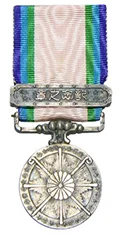
Established: 1944
Eligibility: Imperial Japanese military personnel who served in the Greater East Asia War (1941–1945)
The Greater East Asia War Medal was instituted by Imperial Japan in the later stages of World War II to recognise military personnel who served in campaigns across Asia and the Pacific. Intended as a broad campaign award for the conflict Japan termed the Greater East Asia War, it was introduced late in the war and was not widely distributed before Japan’s surrender in 1945.
Manchukuo Border Incident Medal
Campaign Medal
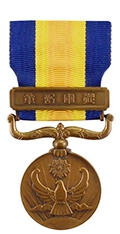
Established: Late 1930s (following border conflicts of 1938–1939)
Eligibility: Japanese personnel involved in border clashes with Soviet and Mongolian forces
The Manchukuo Border Incident Medal recognised Japanese personnel who took part in the series of border clashes fought around Manchukuo during the late 1930s. Awarded for service against Chinese and Soviet forces, it commemorated the escalating frontier conflicts that foreshadowed Japan’s wider war in Asia.
Manchuria Dispatch Badge
Commemorative Military Badge
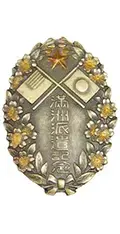
Established: Early 1930s (commemorative issue)
Eligibility: Imperial Japanese Army personnel deployed to Manchuria following the 1931 Mukden Incident
The Manchuria Dispatch Badge was awarded to members of the Imperial Japanese Army who served in Manchuria during the early phases of Japan’s expansion on the Asian mainland. Featuring crossed Japanese and Manchukuo flags beneath a gold star and framed by cherry blossoms, the badge symbolised participation in the military and administrative operations that accompanied the establishment of Manchukuo after the 1931 Mukden Incident.
China Incident War Medal
Campaign Medal
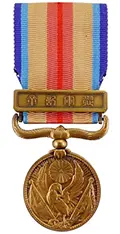
Established: 27th July 1939
Eligibility: Imperial Japanese Army, Navy, and civilian auxiliary personnel who took part in operations related to the China Incident (Second Sino-Japanese War) beginning in 1937.
The China Incident War Medal was created to recognise those who served in Japan’s military operations in China following the outbreak of hostilities at the Marco Polo Bridge in July 1937. Its design features an Imperial soldier beneath rays of the rising sun, while the ribbon of blue, white, red, white, and blue symbolises Japan’s land, sea, and air forces. Awarded throughout the prolonged conflict, the medal became one of Imperial Japan’s most widely issued wartime decorations.
Nationalist China

Order of the Blue Sky and White Sun
Military Order
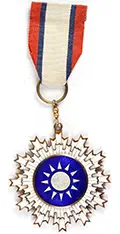
Established: 15th May 1929
Eligibility: Senior officers of the National Revolutionary Army and allied commanders recognised for exceptional leadership and distinguished service in major operations
The Order of the Blue Sky and White Sun was one of Nationalist China’s highest military decorations, awarded primarily to senior officers for exceptional leadership and distinguished service in combat. Widely bestowed during the Sino-Japanese War, it recognised commanders whose actions made significant contributions to China’s resistance against Japanese forces between 1937 and 1945.
Norway

Defence Medal 1940–1945
Campaign Medal
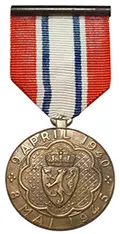
Established: 19th May 1945
Eligibility: Norwegian military personnel, resistance members, merchant navy personnel, and certain civilians who served during the occupation
The Defence Medal 1940–1945 was instituted shortly after Norway’s liberation to recognise military personnel and resistance members who served during the German occupation. Awarded for both active operations and sustained support roles, it honoured the broad national effort to resist and ultimately restore Norwegian independence.
King Haakon VII Freedom Medal
Wartime Merit and Commemorative Medal
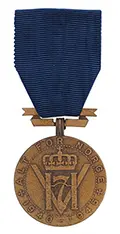
Established: 18th May 1945
Eligibility: Norwegian civilians, military personnel, and foreign nationals who contributed to Norway’s liberation
The King Haakon VII Freedom Medal was awarded to Norwegian civilians, military personnel, and foreign nationals who made significant contributions to Norway’s liberation during World War II. It recognised resistance activity within occupied Norway as well as support for the Norwegian government-in-exile and the wider Allied war effort.

Order of the Brave and Faithful (Quisling Cross)
Political/Military Service Decoration
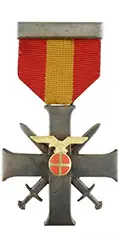
Established: 1943
Eligibility: Individuals who demonstrated loyalty to the Nasjonal Samling regime, including political supporters and Norwegians serving with German forces
The Order of the Brave and Faithful was introduced in 1943 by Vidkun Quisling’s Nasjonal Samling regime during the German occupation of Norway. It was awarded to individuals who demonstrated loyalty to the collaborationist government, including Norwegians serving alongside German forces. The decoration reflects the internal political divisions within occupied Norway during the war.
Poland

Medal for Victory and Freedom 1945
Commemorative Medal
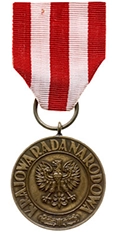
Established: 1945
Eligibility: Awarded to Soviet aligned Polish military personnel and civilians who contributed to the defeat of Nazi Germany.
The Medal for Victory and Freedom 1945 was awarded to Polish military personnel and civilians who contributed to the defeat of Nazi Germany and the liberation of Poland. It recognised both frontline service and support roles, symbolising national acknowledgement of the widespread sacrifice made during the war years.
Cross of Merit with Swords
Bravery/Merit Decoration
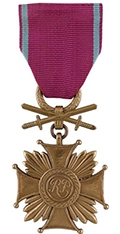
Established: 19th October 1942
Eligibility: Awarded to Polish military personnel and resistance members for bravery or meritorious service under combat conditions, awared by the government-in-exile
The Cross of Merit with Swords was a wartime variant of Poland’s Cross of Merit, awarded for acts of bravery or distinguished service under combat conditions. The addition of crossed swords denoted direct involvement in operations under fire, recognising both courage and essential contributions to active military efforts.
Silesian Uprising Cross
Commemorative Cross
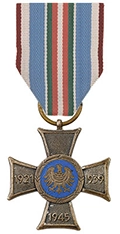
Established: January 1946
Eligibility: Awarded to participants in the Silesian Uprisings as recognised by the post-war Polish state
The Silesian Uprising Cross was instituted to commemorate those who took part in the Polish uprisings in Upper Silesia between 1919 and 1921. Many recipients later served during World War II, and the award symbolised enduring resistance, national identity, and the long struggle to secure Poland’s western borders.
Republican Spain

International Brigades Medal
Campaign/Service Medal
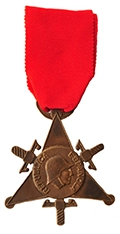
Established: c. 1930s
Eligibility: Foreign volunteers who served in the International Brigades in support of the Spanish Republic
The International Brigades Medal was issued to recognise foreign volunteers who served with the International Brigades in support of the Spanish Republic during the Spanish Civil War. It recognised the contribution of thousands of international fighters who joined the Republican cause against Nationalist forces between 1936 and 1939.
Soviet Union

Order of Bogdan Khmelnitsky
Military Order
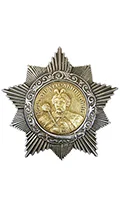
Established: 10th October 1943
Eligibility: Red Army commanders, officers, and partisan leaders for successful operations against Axis forces
The Order of Bogdan Khmelnitsky was awarded to Red Army commanders, officers, and partisan leaders for the successful planning and execution of military operations against Axis forces. Introduced in 1943, it recognised both regular and irregular warfare contributions, highlighting the importance of coordinated offensives and resistance activity in Soviet victories.
Hero of the Soviet Union
Highest Soviet Award
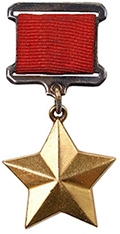
Established: 1934 (widely awarded 1941–1945)
Eligibility: Awarded to Individuals for extraordinary heroism in service to the state
The title Hero of the Soviet Union was the highest distinction awarded by the USSR for extraordinary heroism in service to the state. Recipients were presented with the Gold Star medal, and the honour became closely associated with acts of exceptional bravery by soldiers, pilots, and civilians during the most critical phases of World War II.
Order of Glory
Military Order
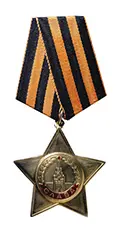
Established: 8th November 1943
Eligibility: Enlisted personnel and non-commissioned officers for repeated acts of personal bravery in combat
The Order of Glory was a three-class decoration awarded to enlisted personnel and non-commissioned officers for repeated acts of personal bravery in combat. Modelled in part on earlier Russian traditions, it recognised frontline courage, with full recipients of all three classes regarded as among the most distinguished soldiers of the Red Army.
Defence of Odessa Medal
Campaign Medal
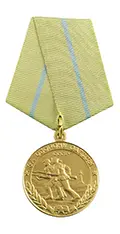
Established: 22nd December 1942
Eligibility: Soviet military personnel, sailors, and civilians who participated in the defence of Odessa in 1941
The Medal for the Defence of Odessa was awarded to Soviet military personnel, sailors, and civilians who took part in the defence of the city during the Axis siege in 1941. It recognised both combat actions and essential support efforts, commemorating the prolonged resistance that tied down enemy forces before the eventual evacuation.
Medal “For Battle Merit”
Service/Bravery Medal
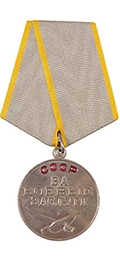
Established: 17th October 1938
Eligibility: Valuable combat actions/merit
The Medal “For Battle Merit” was one of the Soviet Union’s most widely awarded military decorations, recognising acts of bravery, skill, and valuable service in combat. It was frequently bestowed for effective performance under fire or for contributions that supported successful operations without reaching the level required for higher awards.
Medal for Courage
Bravery Medal
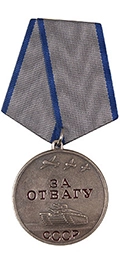
Established: 17th October 1938
Eligibility: Personal bravery in battle
The Medal for Courage was awarded for conspicuous personal bravery in combat and was highly respected among Soviet frontline troops. Often earned under direct enemy fire, it recognised individual acts of heroism and resilience, becoming one of the most valued decorations among soldiers serving on the Eastern Front.
Medal for the Defence of Kiev
Campaign Medal
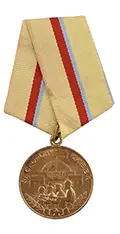
Established: 21st June 1961
Eligibility: Soviet troops, partisans, and civilians who helped defend Kiev between July and September 1941.
The Medal for the Defence of Kiev was instituted in 1961 to recognise those who took part in defending the city during the German invasion of 1941. Awarded retrospectively, it honoured Red Army soldiers, NKVD units, partisans, and civilians who contributed to the defence before Kiev fell in September 1941.
Medal “For the Victory over Japan”
Campaign Medal
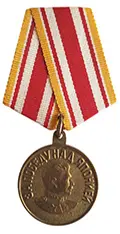
Established: 30th September 1945
Eligibility: Soviet Army, Navy, Air Force, and NKVD personnel who participated in operations against Japan in August 1945, including the Manchurian campaign
The Medal “For the Victory over Japan” was awarded to Soviet military personnel who took part in the August 1945 campaign against Japanese forces in Manchuria, Korea, Sakhalin, and the Kuril Islands. It commemorated the rapid and decisive Soviet offensive that contributed to Japan’s final defeat at the end of World War II.
United Kingdom

Royal Tank Regiment Cap Badge
Regimental Insignia
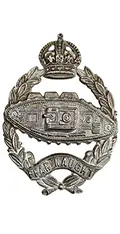
Established: c. 1917
Eligibility: Royal Tank Regiment personnel
The Royal Tank Regiment Cap Badge was the official regimental insignia worn by members of the RTR, symbolising one of Britain’s pioneering armoured units. Featuring the distinctive tank motif, it became closely associated with the development of armoured warfare and the regiment’s key role in both World Wars.
Defence Medal
Service Medal
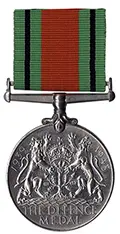
Established: May 1945
Eligibility: Military and civilian personnel with qualifying non-operational service in the United Kingdom or designated areas
The Defence Medal was awarded to military personnel and civilians who completed qualifying service in non-operational roles essential to the defence of the United Kingdom. It recognised contributions such as civil defence, home service, and overseas duties in areas subject to enemy threat during the war.
Victoria Cross
Highest Military Decoration
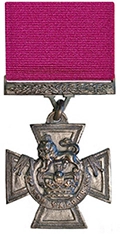
Established: 1856 (awarded through WW2)
Eligibility: Extreme gallantry in the face of the enemy
The Victoria Cross is the United Kingdom’s highest award for gallantry in the face of the enemy, granted for the most exceptional acts of bravery in combat. Open to all ranks, it became the ultimate symbol of heroism during World War II, awarded for actions displaying extraordinary courage under direct enemy fire.
Africa Star
Campaign Star
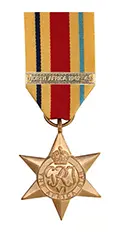
Established: 1943
Eligibility: Operational service in North Africa between 10th June 1940 and 12th May 1943
The Africa Star was awarded to British and Commonwealth personnel who served in the North African campaign between 1940 and 1943. It recognised participation in major operations against Axis forces, with additional clasps denoting specific service such as with the 8th Army or in key phases of the campaign.
War Medal 1939–1945
General Service Medal
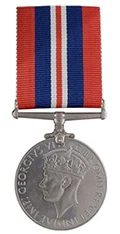
Established: 1945
Eligibility: Full-time service of at least 28 days in the armed forces during World War II
The War Medal 1939–1945 was awarded to all British and Commonwealth personnel who completed a minimum period of full-time service during the war. It served as a universal recognition of wartime contribution, regardless of theatre, and became one of the most widely issued British campaign medals.
Atlantic Star
Campaign Star
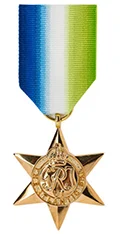
Established: 1945
Eligibility: Operational service in the Atlantic theatre
The Atlantic Star was awarded for operational service in the Battle of the Atlantic, recognising the prolonged struggle against German U-boats and surface raiders. It applied to Royal Navy, Merchant Navy, and RAF Coastal Command personnel, with clasps indicating service in overlapping operational theatres.
1939–1945 Star
Campaign Star
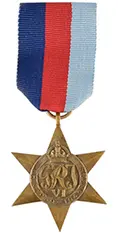
Established: July 1945
Eligibility: Operational service in an active theatre of war between 3rd September 1939 and 2nd September 1945
The 1939–1945 Star was awarded to British and Commonwealth personnel who completed qualifying operational service during the Second World War. As the primary campaign star, it recognised active service in combat theatres and formed the foundation of the British system of wartime campaign awards.
Royal Engineers Cap Badge
Regimental Insignia
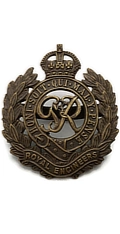
Established: 1856
Eligibility: Corps of Royal Engineers personnel
The Royal Engineers Cap Badge was the official regimental insignia worn by members of the Corps of Royal Engineers. Featuring the royal cypher and the regiment's motto, Ubique ("Everywhere"), it symbolised the vital role played by military engineers in constructing bridges, fortifications, roads, airfields, and other essential infrastructure across every theatre of the Second World War.
United States

European–African–Middle Eastern Campaign Medal
Campaign Medal
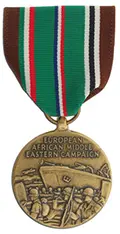
Established: 6th November 1942
Eligibility: Service in the European–African–Middle Eastern Theater between 7th December 1941 and 8th November 1945
The European–African–Middle Eastern Campaign Medal was awarded to United States service members who served in the EAME Theater during World War II. It recognised participation in campaigns across Europe, North Africa, and the Mediterranean, with bronze service stars denoting involvement in specific operations.
Bronze Star Medal
Military Decoration
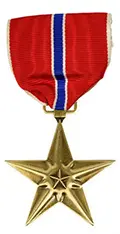
Established: 4th February 1944
Eligibility: Heroic or meritorious achievement or service in a combat zone, with “V” device denoting valor
The Bronze Star Medal was awarded to United States service members for heroic or meritorious achievement in a combat zone. One of the most widely issued American decorations of World War II, it recognised both acts of valor under fire and sustained meritorious service supporting combat operations.
Medal of Honor
Highest Military Decoration
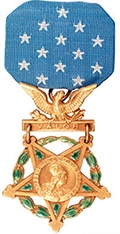
Established: 1861 (awarded through WW2)
Eligibility: Conspicuous gallantry and intrepidity at the risk of life above and beyond the call of duty
The Medal of Honor is the highest military decoration awarded by the United States, presented for acts of conspicuous gallantry above and beyond the call of duty. Awarded across all branches of the armed forces, it represents the pinnacle of battlefield heroism and sacrifice during World War II.
Air Medal
Military Decoration
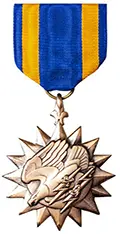
Established: 11th May 1942
Eligibility: U.S. and allied personnel for aerial achievement or heroism
The Air Medal was awarded to United States and allied personnel for heroic or meritorious achievement while participating in aerial flight. Widely issued during World War II, it recognised both single acts of bravery and sustained operational flying, with additional awards denoted by oak leaf clusters.