1st October 1934
Hitler secretly orders the creation of a new German air force ‘Luftwaffe’ and an expansion of the size of Wehrmacht and Kriegsmarine.
WorldWar-2.com
World War 2 Timeline
January 1933 – September 1945
‘Propaganda is not an end in itself, but a means to an end. If the means achieves the end then the means is good. The new Ministry has no other aim than to unite the nation behind the ideal of the national revolution.’Joseph Goebbels - Reich Minister for Public Enlightenment and Propaganda - 15th March 1933
This World War 2 timeline traces the conflict from the political and military developments of the 1930s through to Japan’s surrender and final Allied victory in September 1945. Before the first shots were fired, the foundations of global conflict were laid during the Road to War (1933–1939), an era marked by the rise of the Nazi Party and the collapse of international diplomacy, setting the world on a path towards war.
World War 2 was fought from 1st September 1939 to 2nd September 1945, while this timeline begins in January 1933 to explore the events that led to the conflict. The war in Europe began with Germany’s invasion of Poland on 1st September 1939. France and the United Kingdom honoured their commitments to Poland, declaring war two days later, followed by Australia, New Zealand, Canada and South Africa. The Second World War became the most destructive conflict in human history, fought across Europe, Africa, Asia and the Pacific, drawing more than 50 nations into the conflict and causing more than 60 million deaths.
During the first three years, Germany and Italy scored sweeping victories in Poland, France, Norway, the Balkans, the Soviet Union and North Africa, while Japan won early successes at Pearl Harbor, Singapore and the Philippines. By early 1943, however, the Axis had suffered decisive defeats at Midway, El Alamein and Stalingrad.
These setbacks, described by Churchill after El Alamein as ‘the End of the Beginning’, forced the Axis onto the defensive. Germany and Japan faced further defeats at Kursk, Sicily and in the Solomons. With Italy’s surrender in September 1943, Germany and Japan were left to fight alone against a strengthening Allied coalition. By late 1944, they were being pushed back towards their pre-war borders, suffering further defeats in Normandy, Belorussia, Burma and New Guinea.
Hitler’s suicide on 30th April 1945 preceded Germany’s unconditional surrender in May, bringing the war in Europe to an end. Japan announced its surrender on 15th August following the atomic bombings of Hiroshima and Nagasaki and the Soviet Union’s entry into the war against Japan. The formal surrender was signed on 2nd September 1945, bringing World War 2 to an end.
The war’s aftermath reshaped the world order, exposing the atrocities committed by the Axis powers and shifting global influence from Britain and France to the United States and the Soviet Union. The unity that had bound the Allies together soon gave way to the mistrust of the Cold War.
This introduction gives a brief overview of World War 2. Explore WorldWar-2.com to follow the conflict through detailed WW2 timelines, battles and military campaigns, while discovering the leaders, weapons, medals and events that shaped the Second World War.
4th October 2026
The Saar Offensive timeline has been completely reworked and expanded, providing a far more detailed account of the French offensive into Germany during September and October 1939. The revised timeline follows the campaign from the initial French advance into the Saarland through the decision to halt the offensive, the subsequent withdrawal, and the German counteroffensive. New period newsreel footage, historical quotations have also been incorporated to provide greater context to this often-overlooked campaign of the opening months of the Second World War.
29th August 2026
A new resource section, World War 2 Movies, has been added, showcasing a curated collection of films inspired by the Second World War. From epic battles and daring special operations to personal stories of courage and sacrifice, each entry includes a synopsis, historical context, and production details, making it easier to explore the conflict through film.
10th August 2026
The Leaders and Commanders section has been expanded with four new profiles: Generaloberst Werner von Fritsch, former Commander-in-Chief of the German Army; Generaloberst Heinz Guderian, the influential panzer commander and military theorist; Lieutenant Commander Jan Grudziński, commander of the Polish submarine ORP Orzeł; and Major General Stefan Dąb-Biernacki, commander of the Polish Prusy Army. These additions further broaden the site's coverage of military leaders who directed operations on land and at sea during the opening years of the Second World War.

Light Tank
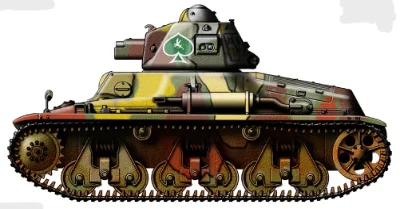
The Hotchkiss H35 was a French light tank developed in the mid-1930s to support infantry formations and provide a well-protected vehicle capable of operating alongside advancing troops. Entering service in 1936, it featured a cast-armour construction that offered impressive protection for a vehicle of its size and made it one of the more durable light tanks available at the time. The H35 was armed with a short-barrelled 37 mm SA18 gun and a coaxial machine gun. Armour protection reached up to 34 mm, providing good resistance against many early anti-tank weapons. However, the tank was powered by a relatively weak engine and retained a one-man turret, forcing the commander to act as commander, gunner, and loader simultaneously, which reduced combat efficiency. Read more about the Hotchkiss H35 →
Hitler secretly orders the creation of a new German air force ‘Luftwaffe’ and an expansion of the size of Wehrmacht and Kriegsmarine.
As per the agreement made in Munich, German troops entered the Sudetenland at 2pm, where they were greeted by crowds of Sudeten Germans who welcomed them with Nazi flags and showered them with flowers.
In a speech delivered to Parliament, Winston Churchill expresses his criticism of the government’s policy of appeasement towards Germany, describing it as ‘a complete and unmitigated defeat.’
Despite being outgunned and poorly equipped, Polish forces under General Franciszek Kleeberg launch a surprise counteroffensive in the Kock area, attacking the German XIV Motorized Corps on both flanks. The bold manoeuvre results in the successful recapture of Serokomla, forcing the Germans to retreat across the Tyśmienica River.
Adolf Hitler takes the salutes of the German Army during the ‘Siegesparade’ (Parade of Victory) through Warsaw.
The Soviet Union requests that Finland send a delegation to Moscow to discuss changes to the border between the Soviet Union and Finland.
A Lithuanian delegation returns to Moscow with counter proposals for the ‘mutual assistance’ pact, but Stalin refuses them, although he does agree to reduce the Soviet garrison to 20,000. With the Soviet’s wanting an immediate answer, the Lithuanian delegation stalls for time and returns home.
Hitler signs a decree formally annexing parts of western Poland to Germany and officially establishing the new regions of Reichsgau Posen (renamed Reichsgau Wartheland in January 1940) and Reichsgau West Prussia. Smaller areas were incorporated into the existing Reichsgau East Prussia and Reichsgau Upper Silesia.
A third Lithuanian delegation arrives on Moscow in an attempt to demand as much of Vilnius Region be transferred from Poland as possible before signing the ‘mutual assistance’ agreement, but they find Stalin inflexible. With little choice but to sign or face a Soviet invasion, they sign the proposed treaty hoping to keep some degree of autonomy.
The Soviet Union demands of the Finnish delegation in Moscow, that they agree to move the border on the Karelian Isthmus back to within 30km of Viipuri, cede the islands of Suursaari, Tytarsaari in the Gulf of Finland, agree to lease them the Hanko Peninsula for 30-years, with rights to build a naval base on it and cede the Kalastajansaarento Peninsula in the far north of Finland. In compensation the Soviet Union proposed to cede to Finland the small settlements of Repola and Porajarvi in eastern Karelia.
At 01:40am, the British light cruiser HMS Ajax intercepts elements of the Italian 1st Torpedo Boat Squadron and 11th Destroyer Flotilla, which are patrolling the Malta Channel around 30 miles south-east of Sicily in an attempt to intercept the British convoy MB6, which HMS Ajax is escorting from Alexandria to Malta. Known as the Battle of Cape Passero, the engagement sees HMS Ajax, equipped with a Type 279 radar set, detect and engage the Italian ships before they are fully prepared for action. By 01:48am, the Italian torpedo boats Airone and Ariel have been sunk. Shortly afterwards, at around 01:50am, HMS Ajax is hit seven times by a full broadside from the destroyer Artigliere, knocking out a radar set and two guns. HMS Ajax responds by scoring several hits on Artigliere shortly after 2am, killing her commanding officer, Commander Carlo Margottini, disabling her engines, and starting major fires aboard the vessel. Having fired nearly 500 shells and suffered moderate damage, HMS Ajax eventually ceases fire and breaks off pursuit of the remaining three destroyers of the flotilla.
Following its daring escape from internment in Estonia the previous month, the Polish submarine ORP Orzeł safely arrives in Rosyth, Scotland, after navigating a perilous journey through the Baltic Sea and North Sea.
The German 1st Army completes its final preparations for Unternehmen Herbstwind (Autumn Wind), having assembled nine assault divisions supported by approximately 532 divisional and corps-level guns and mortars, together with nearly 200 fighter, reconnaissance and bomber aircraft from Luftflotte 3 (Fliegerkorps I).
The Soviet Union begins preparations to transfer Polish prisoners of war and civilians to the Germans who have ended up on the "wrong side" of the newly established German–Soviet border in occupied Poland.
As part of a broader Nazi campaign to Germanize the territories of western Poland recently annexed into the Reich, German authorities begin the mass deportation of Polish civilians from Posen (Poznań) and its surrounding areas. Forcibly loaded onto trains, these civilians were transported east to the future borders of the General Government (an area of Poland not annexed but under German control) and left to fend for themselves.
The United States government advises all American citizens in the Far East to leave, citing increased instability and the growing risk posed by Japan’s military actions in China and Indochina.
Prime Minister of France
2nd September 1939

‘If the blood of France and of Germany flows again, as it did twenty-five years ago, in a longer and even more murderous war, each of the two peoples will fight with confidence in its own victory, but the most certain victors will be the forces of destruction and barbarism.’

Political Service: 1918 – October 1940
Key Roles & Appointments:
1937–1940: Prime Minister of the United Kingdom
1940: Lord President of the Council
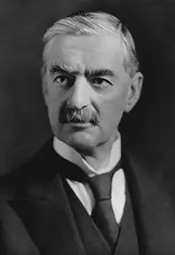
Neville Chamberlain served as Prime Minister of the United Kingdom from 1937 until May 1940 during a period of growing international tension and the opening months of the Second World War. During the late 1930s, he pursued a policy of negotiation with Germany in an effort to avoid another major European conflict while Britain continued to strengthen its armed forces. This policy culminated in the Munich Agreement of September 1938, which transferred the Sudetenland from Czechoslovakia to Germany. Following Germany's invasion of Poland in September 1939, Chamberlain declared war on Germany and led Britain during the opening phase of the conflict. His government oversaw the mobilisation of British forces and the early campaigns of the war, including operations in Norway. Military setbacks and growing criticism of his leadership weakened his position in Parliament, particularly after the failure of the Norwegian campaign in 1940. On 10th May 1940, the day Germany launched its offensive against France and the Low Countries, Chamberlain resigned and was succeeded by Winston Churchill. He remained in the War Cabinet for several months and continued to support the wartime government until ill health forced his retirement. Chamberlain died in November 1940, six months after leaving office. Explore more leaders and commanders →