2nd December 1939
The League of Nations issues a strong condemnation of the Soviet Union’s invasion of Finland and demands an immediate halt to hostilities.
3rd December 1939
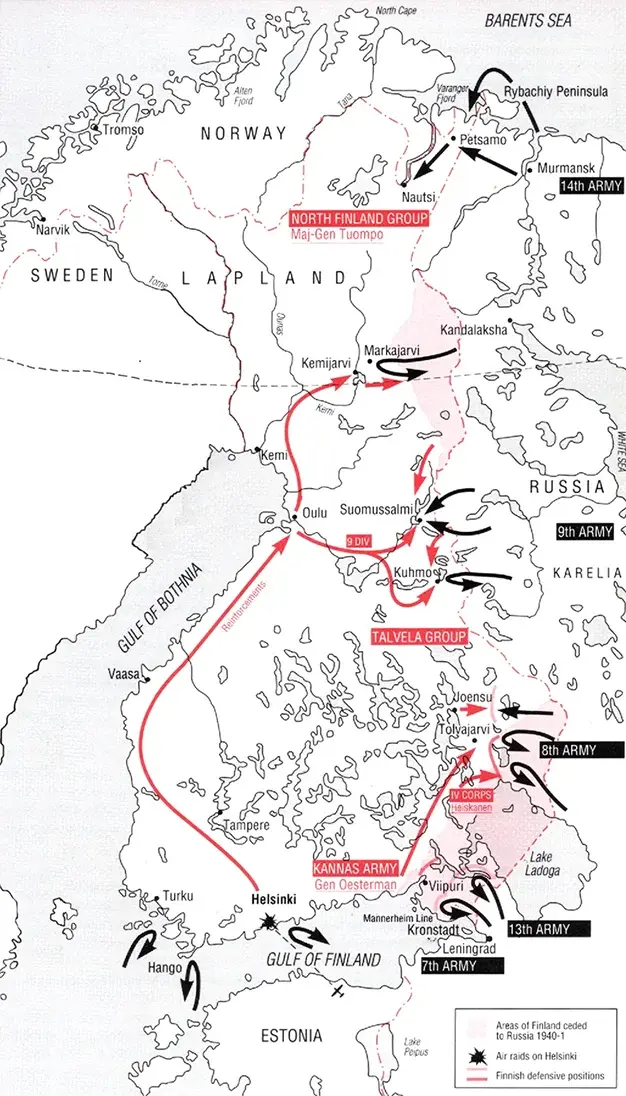
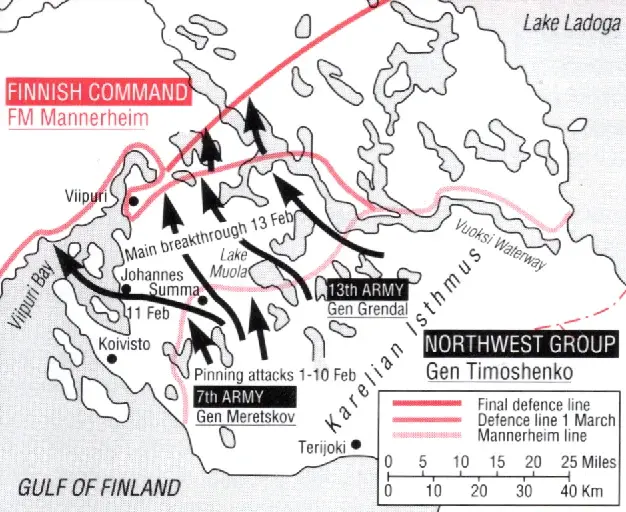
Finnish forces complete their fighting withdrawal on the Karelian Isthmus from the border area into the prepared defences of the Mannerheim Line, a heavily fortified position stretching across the width of the Isthmus. With their forces now consolidated, the Finns expected this defensive line to provide a solid defensive position to prevent further Soviet advances whilst inflicting heavy casualties on any further Soviet attacks.
6th December 1939
The Red Army launches its first major offensive against the Mannerheim Line using overwhelming numbers of heavy artillery, tanks, and infantry. However, a determined Finnish defence repulses these attacks along the entire length of the line, inflicting significant casualties in the process.
Despite the ongoing war, Finland celebrates the anniversary of its declaration of independence from Russia in 1917.
7th December 1939
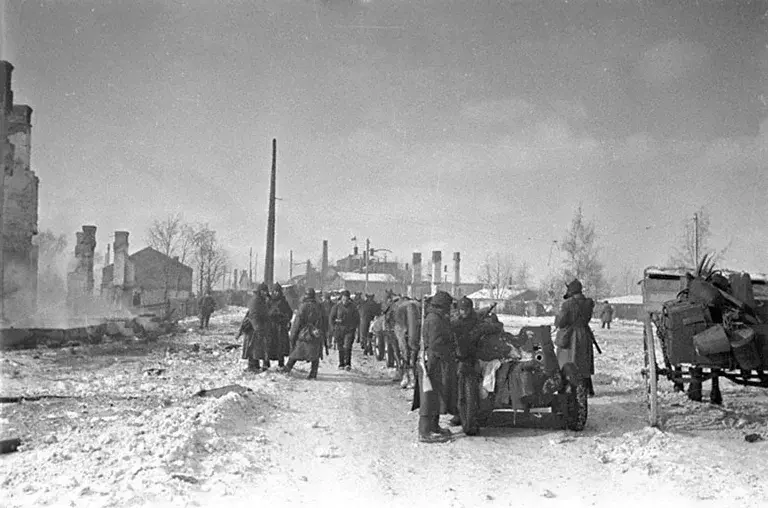
Finnish units withdraw from Suomussalmi but destroy the village to deny it to the Soviets. The Soviet 163rd Rifle Division captures the village but is unable to advance any further.
Denmark, Sweden, and Norway declare their neutrality in the ongoing conflict, reaffirming their commitment to stay out of international wars and maintain peaceful relations.
Britain and France decide to provide military support to the Finns, including arms and equipment. They also plan to send troops to assist in their defence. However, the firm neutrality of Sweden and Norway prevent any substantial support from reaching Finland.
8th December 1939
The Finnish 27th Infantry Regiment conducts a counter-attack against the Soviet 163rd Rifle Division at Suomussalmi, in an attempt to recapture the village.
9th December 1939
In an effort to revitalize military operations against Finland, Stalin orders Marshal Kliment Voroshilov to take over command of the Leningrad Military District from Meretskov, who is reassigned to lead the 7th Army instead.
The Finns halt their counterattack against the Soviet 163rd Rifle Division at Suomussalmi, unable to recapture the village with their limited forces. The Finns now move over to guerrilla tactics in order to harass and weaken the Soviet forces while they build up their strength in the area.
12th December 1939
With the aim of cutting through Finnish defences in Lapland to reach the town of Rovaniemi and sever Finland’s access to Norway, the Soviet 122nd Rifle Division of the 9th Army, having advanced westward from the Murmansk railway with supporting armour and artillery, capture the town of Salla from units of the Finnish Lapland Group.
14th December 1939
With the authority of the League of Nations now severely diminished, it resolves to expel the Soviet Union for its invasion of Finland and encourages member nations to give all possible support to Finland. The USA, which isn’t a member of the League, makes strong protests to Moscow, condemning its invasion of Finland.
15th December 1939
In the Petsamo area in the far north of Finland, Finnish troops conduct a tactical withdrawal from Salmijärvi, a key site near the Arctic coast, in the face of overwhelming pressure from the Soviet 14th Army. As part of a broader delaying action and scorched-earth policy, the Finns destroy the nickel and metal mines in the area to prevent them from falling into Soviet hands.
17th December 1939
The Soviet 7th and 13th Armies begin a major offensive against the Mannerheim Line in the Summa area with around 120,000 infantry, two tank brigades, and support from over 200 aircraft. The aim is to break through and capture Summa along with the key road junction of Lähde, thereby opening up the way for an advance on Viipuri. Following an intense barrage, Red Army engineers are able to create several holes in the Finnish 5th Division’s defensive line. However, poor coordination of Soviet forces and strong resistance from the Finns, who were well-prepared in their defences, hamper progress and inflict heavy Soviet casualties, preventing a breakthrough.
19th December 1939
With Finnish anti-tank and wire entanglements still largely intact, further heavy Red Army attacks are beaten off by the Finns around Summa, again inflicting heavy losses on the Soviet infantry. Some isolated groups of Soviet tanks are able to break through to the Finnish rear, but without infantry support, they are eliminated piecemeal.
22nd December 1939
With the Red Army unable to decisively breach the Mannerheim Line at Summa and having suffered around 7,000 casualties and the loss of at least 50 tanks, the offensive is called off.
23rd December 1939
The Finns launch a counter-attack on a 25-mile front from Lake Kuolemajärvi to Lake Muolaanjärvi, using the 1st and 6th Divisions of the II Corps. Designed to take advantage of the failure of the Soviet offensive at Summa, the planning was poor and hurried, leading to only limited reconnaissance of Soviet defensive positions. Beginning at 6:30 a.m., the Finnish units immediately started to suffer heavy losses. By the end of the day, having sustained more than 1,300 casualties with limited gains to show for it, the offensive is cancelled.
27th December 1939
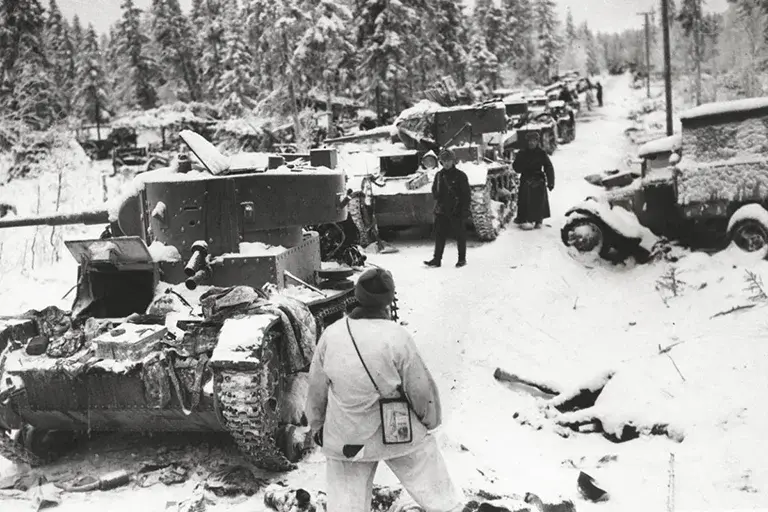
Reinforced with two additional infantry regiments (11th and 65th), the Finns launch a major assault against the Soviet 163rd Rifle Division, driving it out of Suomussalmi and inflicting heavy casualties, capturing a sizable number of prisoners, with the remainder of the division retreating in disorder across the frozen lakes.