The Road to War
The road to World War 2 took different forms in Europe and Asia. These films explore the rise of Nazism, British debates over appeasement, the Spanish Civil War and Japanese expansion in China. Biographical stories also trace the longer political changes surrounding the conflict. Follow The Road to War timeline for the events that connected these regional crises to global war.
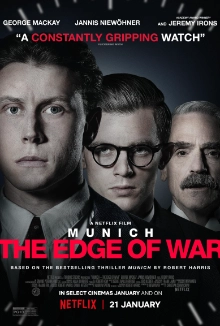
The September 1938 Munich crisis becomes a lens on appeasement, intelligence and the limits of diplomacy. Fictional former classmates move around the real negotiations over Czechoslovakia’s Sudetenland, allowing viewers to consider what British and German officials knew about Hitler’s ambitions. The thriller’s secret mission should be distinguished from the agreement and its consequences for a country excluded from the bargaining.
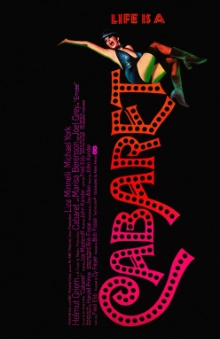
Berlin’s nightlife in 1931 offers an unsettling view of a society in which Nazi politics intrudes into entertainment, friendships and ordinary conversation. The Kit Kat Klub’s performances contrast with growing antisemitism outside its doors. Rather than depicting a military campaign, the film helps enthusiasts explore the cultural atmosphere and everyday accommodations that preceded the destruction of Weimar democracy.
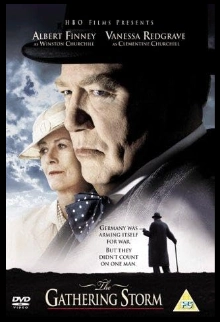
Churchill’s warnings about German rearmament are placed within the domestic and political difficulties of his 1930s isolation. The television drama gives enthusiasts a way into debates over defence spending, access to intelligence and the credibility of dissenting voices. Its focus is the preparation for leadership rather than battlefield command, with private relationships shaping the public figure later associated with Britain’s wartime resistance.
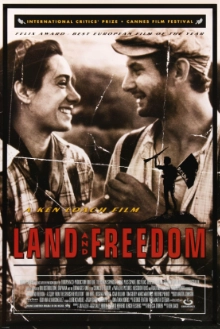
The Spanish Civil War is approached through the political education of a fictional British volunteer, rather than as a simple rehearsal for World War 2. Militia organisation, land ownership and conflict within the Republican cause occupy as much space as combat. This makes the film a useful companion to studying international antifascism and the ideological divisions that complicated resistance to Franco during 1936–1939.
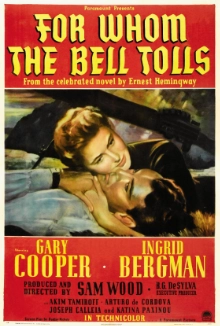
A fictional bridge-demolition mission condenses the military and emotional pressures facing Republican guerrillas in the Spanish Civil War. The American volunteer’s dependence on local fighters draws attention to trust, terrain and civilian participation in irregular warfare. Hemingway’s story connects international involvement with the Spanish struggle, but its romance and compressed operation should be read as literature adapted for cinema rather than a campaign reconstruction.
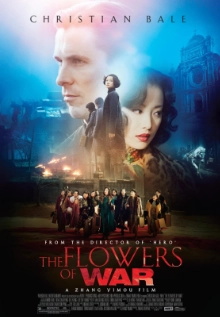
The Japanese capture of Nanjing in December 1937 forms the setting for a fictional story of shelter, sexual violence and sacrifice. By concentrating on people trapped in a church, the film turns a large-scale atrocity into questions about protection and vulnerability. It belongs to the history of the war in China before Pearl Harbor, while its invented rescue narrative requires separation from the documented Nanjing Massacre.
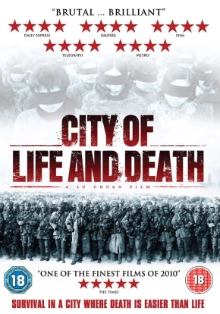
Nanjing’s fall in 1937 is presented through soldiers, civilians and the precarious refuge of the Safety Zone. The shifting perspectives draw attention to occupation as a system of coercion, rather than treating the massacre as background to a single heroic mission. Its reconstructed episodes offer a demanding introduction to Japanese atrocities in China, while individual characters and scenes remain part of a dramatic interpretation.
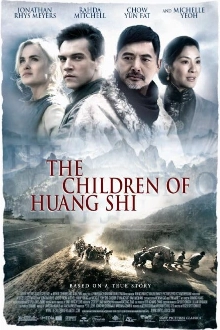
George Hogg’s work with displaced children connects the war in China to education, relief and the disruption of civilian life. The film uses his involvement with an orphanage and an evacuation journey to show a conflict that extends far beyond army movements. Its biographical basis is a starting point for exploring Hogg’s actual work; the screen narrative compresses relationships and events into an adventure of rescue.
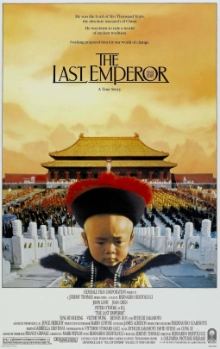
Puyi’s passage from imperial childhood to Japanese-backed rule in Manchukuo connects personal biography with the transformation of East Asian power. The film helps viewers distinguish the symbolic authority of an emperor from the realities of Japanese control in Manchuria. Its sweep extends well beyond World War 2, making captivity and post-war re-education part of a longer account of political dependency and changing identity.
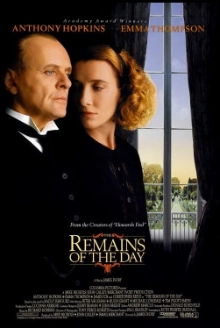
Political sympathy for Nazi Germany is viewed from below stairs in an English country house, where professional obedience shields a butler from examining his employer’s choices. The fictional household makes interwar appeasement a question of personal responsibility as well as foreign policy. Its retrospective structure also asks how people recognise, or evade, the implications of decisions made before war exposed their consequences.
Western Europe
From Dunkirk and Britain’s struggle in 1940 to Normandy, Arnhem, the Ardennes and the crossing of the Rhine, these films explore the war in Western Europe. Political leadership, codebreaking, captivity and civilian life sit alongside battlefield stories, showing how the campaigns affected people beyond the front line. Follow the Western Europe timeline which places these films’ settings within the wider course of the war.
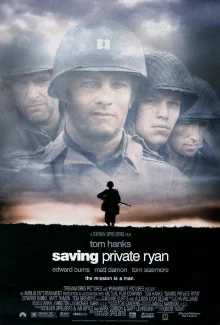
Omaha Beach on 6 June 1944 and the fighting inland provide the historical framework for Spielberg’s fictional rescue mission. The opening assault foregrounds exposed landing craft, obstacles and confusion; later scenes shift to the uncertainty of infantry operations beyond the beachhead. Its usefulness lies in conveying the experience and moral pressures of combat, while the squad’s mission and climactic bridge battle remain dramatic inventions.
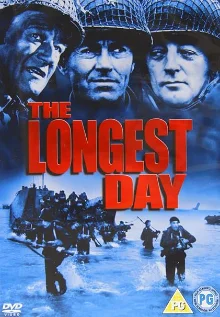
D-Day is reconstructed as an interlocking operation involving airborne troops, beach assaults, naval support and German command decisions. Moving between national viewpoints helps explain why the landings cannot be understood through one unit’s experience alone. The film offers a broad introduction to 6 June 1944, with its many recognisable incidents best used as prompts for investigating the planning, improvisation and uneven outcomes of the invasion.
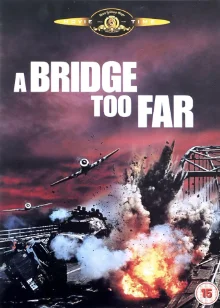
Operation Market Garden in September 1944 exposes the risks of an advance dependent on successive bridges and a narrow ground corridor. The film’s movement between airborne units and commanders makes distance, communications and relief timetables central to understanding the fighting. Arnhem is more than a dramatic last stand here: it is a way into assessing the operational assumptions behind the Allies’ attempt to cross the Rhine through the Netherlands.
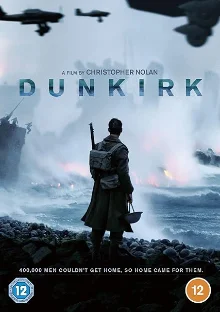
The evacuation of May–June 1940 is experienced through three intersecting perspectives: men waiting ashore, vessels crossing the Channel and fighters overhead. Nolan’s compressed timelines highlight the mismatch between individual survival and a rescue operation’s wider scale. This is a focused British viewpoint on Operation Dynamo, so the film benefits from being read alongside the French defence of the perimeter and the evacuation’s broader Allied context.
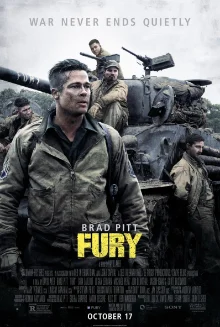
A fictional Sherman crew carries the viewer into the Western Allies’ advance through Germany in April 1945. The tank’s cramped interior contrasts with a landscape where military collapse has not ended lethal resistance. Rather than illustrating a named battle, the film explores crew dependence, exhausted judgement and violence against defeated enemies; its spectacular encounters should not be treated as a representative record of armoured tactics.
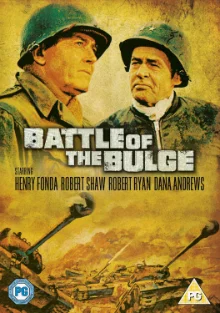
The German Ardennes offensive of December 1944 provides the premise for a heavily fictionalised tank-war spectacle. Fuel shortages and the disruption of Allied expectations connect the drama to real strategic pressures, but its characters, geography and battle scenes simplify the campaign. Enthusiasts can use it to identify the offensive’s basic stakes before turning to the actual winter conditions, road network and fighting around places such as Bastogne.
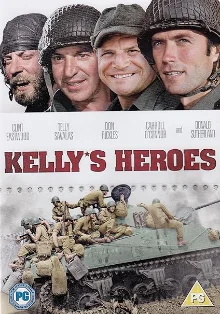
A fictional gold raid in wartime France turns the liberation campaign into a satire of military hierarchy and private profit. Its soldiers operate within the machinery of an Allied advance while pursuing an objective unrelated to defeating Germany. The film is most useful as an example of how 1970s cinema questioned conventional war heroism; its irreverent tone and imagined operation are distinct from a history of the 1944 campaign.
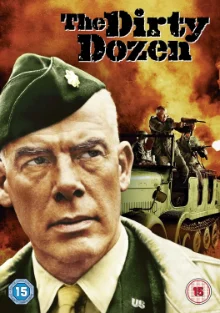
The imagined assault on a château before D-Day draws on the appeal of raids behind enemy lines rather than reconstructing a documented operation. Training condemned prisoners as expendable commandos turns discipline and military justice into the film’s main historical questions. For viewers exploring wartime special operations, it is a provocative fictional comparison with real selection, preparation and command arrangements, rather than evidence that such a unit existed.
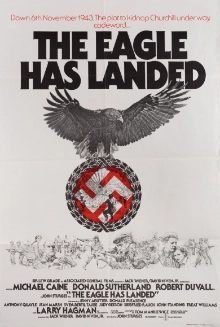
An invented attempt to seize Churchill brings the war to an English village through disguise, infiltration and a sudden breakdown of secrecy. The 1943 setting supports a thriller about intelligence and irregular operations, but the central mission is fictional. Its interest lies in how cinema imagines the vulnerability of wartime leadership and the collision between an isolated commando plan and the everyday life of civilians.
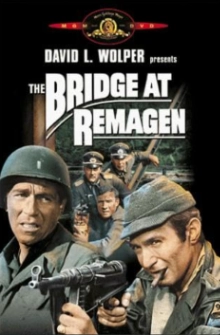
The capture of the Ludendorff Bridge in March 1945 illustrates how an unexpected opportunity could alter the pace of the Allied advance. The drama contrasts American pressure to establish a Rhine crossing with German orders to deny it. Fictionalised participants concentrate the conflict, but the surviving bridge provides a concrete historical anchor for studying retreat, demolition decisions and the exploitation of a fragile bridgehead.
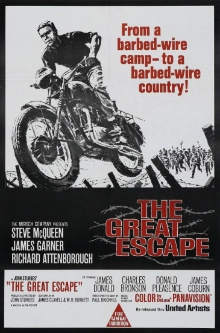
The March 1944 breakout from Stalag Luft III supplies the historical foundation for the film’s elaborate tunnels and escape preparations. Composite characters and invented episodes, including the famous motorcycle pursuit, give the operation a Hollywood shape. Behind that adventure lies a harsher outcome: 76 prisoners escaped and 50 recaptured men were murdered, making the story an entry point into both POW resistance and Nazi war crimes.
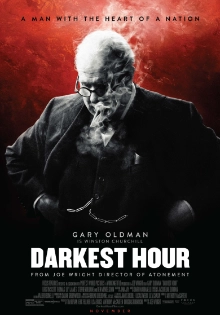
Britain’s political crisis in May 1940 is examined through Churchill’s first weeks as prime minister, as the German advance threatens Allied armies in France. Cabinet disagreement and the prospect of negotiations give the speeches their immediate stakes. The film dramatises leadership under pressure, but imagined encounters should be separated from the documented War Cabinet debates and the military emergency culminating in Dunkirk.
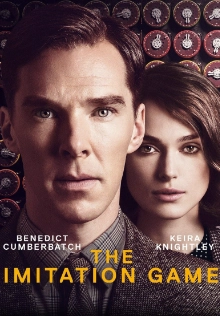
Bletchley Park’s struggle with Enigma connects the European war to mathematics, intelligence and the use of intercepted information. Turing’s career gives the film a personal centre, although the lone-genius narrative compresses a collective effort that also depended on Polish breakthroughs and colleagues including Gordon Welchman. Its post-war storyline broadens the historical questions to secrecy and the persecution of a man whose wartime contribution remained publicly obscured.
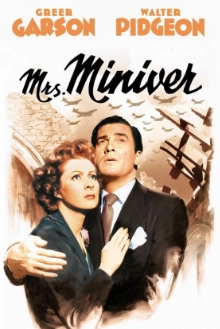
Britain’s home front during the crisis of 1940 connects an English family’s experience with Dunkirk, air raids and local defence. The film broadens the Western Europe section beyond military operations to show how the campaign reached civilian homes and communities. Released in 1942, it also reveals how wartime cinema presented British endurance and sacrifice to American audiences, combining domestic drama with an appeal for Allied solidarity.
Eastern Europe
Stalingrad, the fighting on the Eastern Front and the final days of Berlin form the focus of this selection of films. Soviet and German perspectives explore urban combat, retreat, encirclement and the collapse of the Nazi regime. Follow the Eastern Europe timeline to understand the wider theatre, from the opening campaigns in Poland and Finland to the battles represented here.
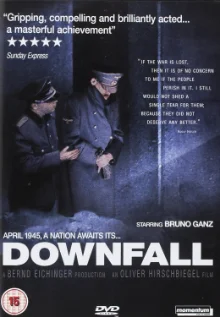
Berlin in April 1945 is seen from inside the bunker and from a city being destroyed around it. The contrast exposes the distance between Hitler’s orders and the military reality of the Soviet advance. Drawing on accounts of the regime’s final days, the film is especially useful for examining loyalty, denial and responsibility among those who continued to serve a dictatorship as its capacity to govern collapsed.
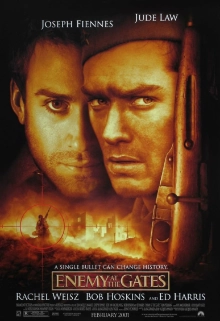
The struggle for Stalingrad in 1942–1943 becomes a contest over visibility, morale and the propaganda value of a celebrated sniper. Vasily Zaitsev was a real Soviet marksman, but the film’s romance and concentrated duel structure should be approached as dramatic storytelling. Ruined buildings and contested sightlines offer a route into discussing urban warfare, while the wider battle demanded far more than individual marksmanship.
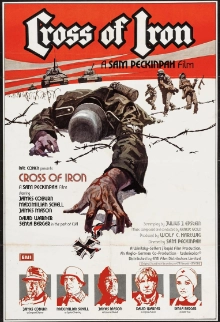
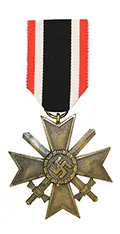
The German retreat in the Kuban in 1943 provides a setting for conflict between experienced enlisted men and an officer seeking personal distinction. The Iron Cross becomes a symbol of status disconnected from the soldiers’ struggle to stay alive. Its fictional unit offers a sharply critical view of military hierarchy, allowing enthusiasts to examine how post-war cinema challenged heroic portrayals of the Wehrmacht.
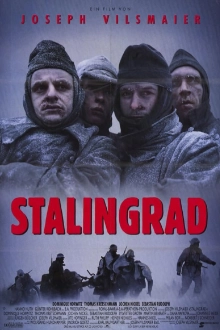
The destruction of Germany’s Sixth Army is approached through men whose expectations of victory dissolve in street fighting, encirclement and winter deprivation. Beginning with their earlier confidence makes the change in conditions particularly stark. This German-perspective drama is a companion to studying the Soviet counteroffensive and the failure to relieve the pocket, while its central soldiers give an imagined personal shape to a much larger military disaster.
Italy and the Balkans
This selection brings together the Allied landings at Anzio and commando adventures set in the occupied Greek islands and Yugoslavia. Coastal defences, mountain terrain and cooperation with local fighters shape the action. Anzio takes its setting from a historical campaign, while the two Navarone films use fictional sabotage missions to explore the dangers of operating behind enemy lines in the Balkans.
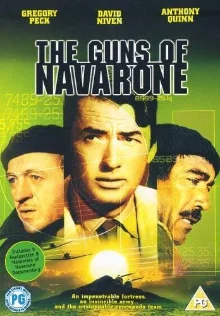
A fictional sabotage mission in the German-occupied Aegean links island warfare with the vulnerability of troops dependent on sea evacuation. The enormous guns supply a clear adventure objective, while local resistance and divided loyalties complicate the operation ashore. Its invented island and mission are best used to introduce questions about geography and combined operations, rather than as a reconstruction of an actual raid.
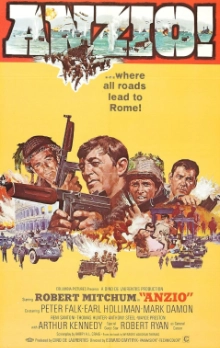
The January 1944 landings behind the German front in Italy become a study of an opportunity followed by costly confinement. A correspondent’s viewpoint connects command hesitation with the vulnerability of troops on an exposed beachhead. The film’s interpretation invites comparison with Operation Shingle’s real objectives and constraints, especially the difficulty of turning an amphibious landing into an inland advance before German forces responded.
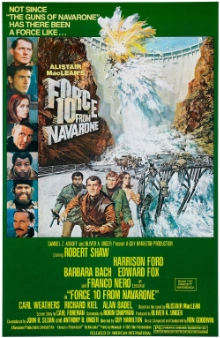
Occupied Yugoslavia supplies the terrain for an invented Allied mission involving sabotage, partisan contacts and uncertain loyalties. The sequel expands the Navarone adventure into a landscape where a bridge’s military value depends on the routes and forces around it. Its fictional operation is useful for discussing cinema’s portrayal of Balkan resistance, but should not stand in for the region’s complex occupation and civil conflicts.
North Africa
The films in this section explore the desert war through Tobruk’s defence, retreat across Libya, raids on enemy installations and the leadership of Allied forces. Water, fuel, transport and supply are recurring concerns. Patton and The Big Red One also start in North Africa before moving into later European campaigns. Follow the North Africa timeline which provides the historical setting for the desert campaigns of 1940–1943.
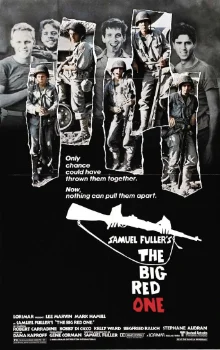
Samuel Fuller’s experience as a soldier informs this journey with the US 1st Infantry Division from North Africa through Sicily and Western Europe. Recurring survivors connect separate campaigns through the routine, fear and chance of infantry service. Its place in this section reflects the division’s African fighting, but the film’s broader value is showing how successive operations accumulated into one soldier’s war.
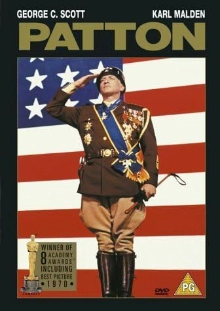
The North African campaign introduces a portrait of command that later follows Patton through Sicily and Western Europe. Battlefield recovery, competition between Allied leaders and controversy over his treatment of soldiers are placed alongside his tactical ambition. The film is a useful route into coalition command and the making of a public military reputation, while its dialogue and character emphasis remain a biographical interpretation.
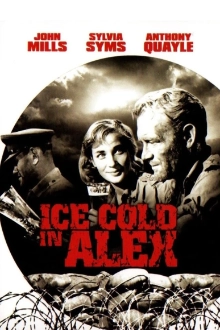
The retreat from Tobruk in 1942 is viewed through an ambulance journey rather than a grand battle. Sand, mechanical strain, thirst and exhaustion show how movement itself could become a military crisis in the desert. The fictional travellers and their concealed loyalties give the film suspense, but its strongest historical connection is the dependence of every North African operation on transport, water and human endurance.
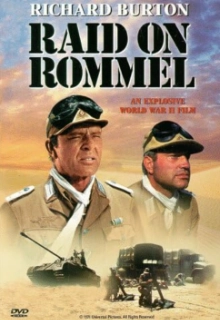
An invented infiltration mission in Libya turns the campaign’s fuel stores, coastal defences and captured vehicles into targets for a small raiding party. The story belongs to the adventure tradition of desert warfare, rather than offering a biography of Rommel or an operational record. Its useful historical questions concern disguise, mobility and the relationship between local sabotage and the needs of a larger Allied offensive.
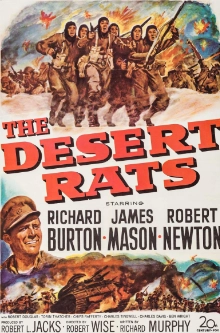
The defence of Tobruk in 1941 frames a story about an officer learning to command Australian troops under siege. The garrison’s endurance makes a defended port, rather than a moving tank column, the centre of desert warfare. Although its characters and incidents are dramatised, the film directs attention to infantry positions, raids and the importance of denying Rommel a harbour along the North African coast.
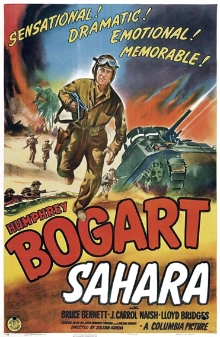
An isolated well turns the retreat following Tobruk’s fall in 1942 into a struggle over the resource that desert armies cannot do without. A fictional American tank crew and multinational survivors make Allied cooperation tangible at the level of a small group. Produced during the war, the film combines that message of solidarity with an unusually clear reminder that water and supply could determine a unit’s freedom to manoeuvre.
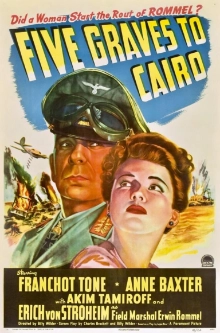
A fictional espionage plot transforms the British retreat in 1942 into a search for the logistical secret behind Rommel’s advance. The desert hotel becomes a meeting point for occupying officers and civilians forced to negotiate their presence. Wilder’s thriller is especially interesting for connecting intelligence with supply, while the hidden depots and assumed identity should be understood as plot devices rather than a documented explanation of the campaign.
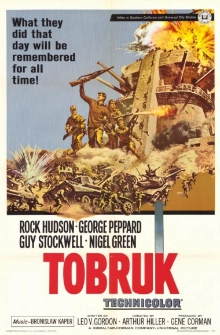
A fictional raid on German fuel installations in 1942 connects commando action to the supply pressures of the North African campaign. German-speaking Jewish soldiers and a Canadian officer make disguise and identity central to the mission across the desert. Its large-scale climax is an adventure construction, but the premise gives enthusiasts a way to investigate why ports, fuel dumps and specialised raiding units mattered to operations in Libya.
Asia and the Pacific
Pearl Harbor, Guadalcanal, Iwo Jima and Okinawa feature alongside stories of civilian internment in Shanghai, captivity on Java and forced labour on the Burma–Thailand Railway. The selection includes American and Japanese viewpoints, as well as films about survivors’ post-war lives.
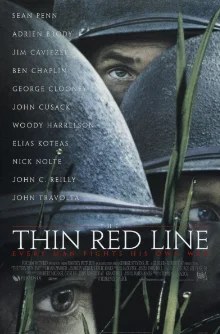
Guadalcanal in 1942 is presented as both a contested landscape and a disturbance of the soldiers’ inner lives. Attacks on Japanese positions are interrupted by reflections on fear, nature and the meaning of violence. The fictional company makes this an interpretive companion to the campaign: it asks what the struggle felt like to individuals, rather than explaining the island’s full land, sea and air battle.
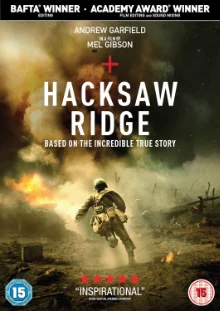
Desmond Doss’s service on Okinawa in 1945 connects one medic’s convictions with the demands of an assault against prepared Japanese defences. His refusal to carry a weapon makes rescue under fire the film’s measure of courage. Based on a real Medal of Honor recipient, it offers a starting point for investigating combat medicine and conscientious objection, while concentrating his wider service into a dramatic account of the escarpment fighting.
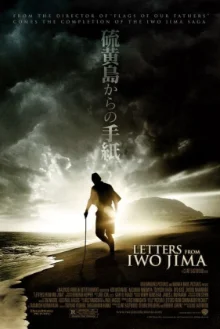
Iwo Jima’s defence in 1945 is seen from the Japanese side, with letters and private doubts set against military expectations of sacrifice. The attention to tunnels and concealed positions helps explain why the island presented such a difficult objective for American attackers. General Kuribayashi is historical, while imagined dialogue and individual stories turn the defensive battle into an examination of duty, isolation and doomed expectations.
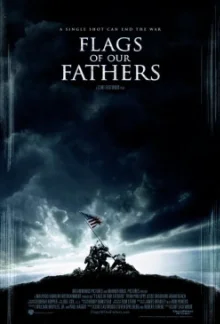
The photograph of the flag-raising on Iwo Jima becomes a study of how wartime images acquire meanings beyond the experience of the men in them. Moving between the 1945 battle and a fundraising tour exposes the distance between public heroism and combat memory. Its historical value lies in raising questions about identification, propaganda and remembrance, rather than treating an iconic photograph as a complete account of the island campaign.
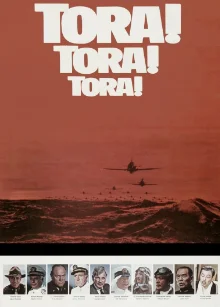
Pearl Harbor on 7 December 1941 is reconstructed through Japanese planning and American command and intelligence failures. The shifting viewpoints encourage viewers to examine a chain of decisions rather than search for one explanation for surprise. Its procedural approach makes it a useful introduction to the attack’s preparation and execution, although condensed conversations and dramatised scenes still need comparison with the documentary record.
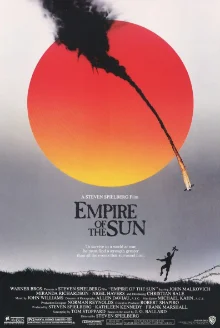
Japanese-occupied Shanghai and civilian internment are experienced through a British child whose fascination with aircraft coexists with hunger and dislocation. Adapted from J. G. Ballard’s novel, the film offers a subjective view of an imperial community losing its protected position. The camp setting opens questions about civilian captivity in Asia, while the boy’s perceptions and the story’s literary origins distinguish it from a comprehensive occupation history.
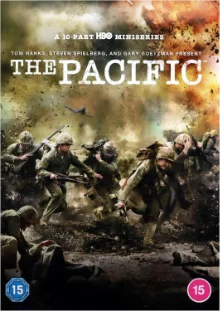
The campaigns of Guadalcanal, Cape Gloucester, Peleliu, Iwo Jima and Okinawa are connected through the lives of US Marines and their difficult return home. Drawing on veterans’ accounts, the miniseries gives sustained attention to conditions often compressed in a single feature film. Its particular strength for enthusiasts is the cumulative burden of repeated operations: climate, casualties and psychological damage persist after an island has been declared secured.
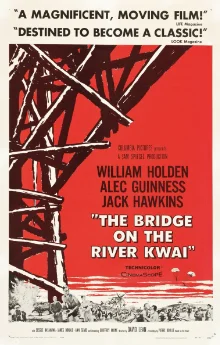
The Burma–Thailand Railway supplies the historical setting for a fictional confrontation over military pride, collaboration and sabotage. Colonel Nicholson’s fixation on the bridge creates the film’s moral argument, rather than representing how British prisoners generally behaved. Viewers can use it to begin exploring Japanese forced labour, but should also examine the actual railway’s location and the experiences of both Allied POWs and Asian labourers.
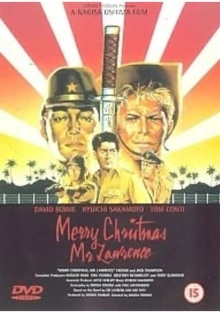
A Japanese POW camp on Java becomes a setting for examining military authority through competing ideas of honour, obedience and shame. The story’s basis in Laurens van der Post’s writing gives it roots in captivity while its central relationships remain dramatised. Its contribution to a historical viewing guide is the attention to cultural interpretation and unequal power, rather than an account of a particular battle or escape operation.
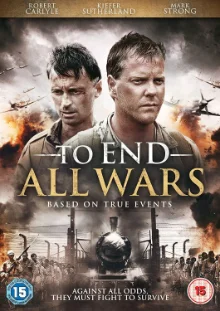
The experience of Ernest Gordon provides the biographical starting point for a drama about prisoners forced to build the Burma–Thailand Railway. Starvation and punishment are examined alongside education, faith and the effort to sustain a community in captivity. That perspective makes the film a companion to studying POW survival, while the wider railway history also requires attention to the many Asian civilians subjected to forced labour.
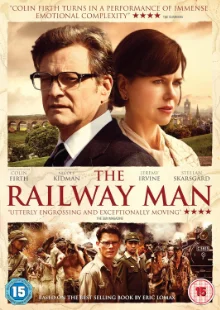
Eric Lomax’s experiences on the Burma–Thailand Railway are connected to the long aftermath of imprisonment and torture. Moving between wartime captivity and a later encounter with a former interrogator makes memory an active historical subject. The film’s value is showing how the conflict continued to shape survivors’ lives decades after 1945, although its biographical events and relationships are arranged for a concentrated screen narrative.
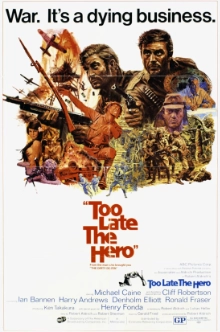
A fictional patrol on a Pacific island in 1942 turns jungle reconnaissance into a test of leadership and competing national expectations. Limited visibility, uncertain intelligence and the difficulty of returning to friendly lines matter more than a named campaign objective. The British unit’s encounter with Japanese forces is best approached as a study of small-unit vulnerability and reluctant heroism, rather than a reconstruction of a documented operation.
War at Sea
Convoy escorts, U-boat patrols, battleship pursuits and Pacific carrier battles show the different demands of naval warfare. These films range from the Atlantic and the River Plate to Norwegian fjords and the Pacific, with Enigma adding the intelligence work behind the protection of shipping during the War at Sea.
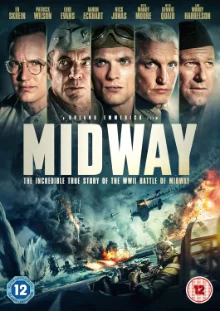
The carrier battle of June 1942 is connected to the intelligence work and earlier Pacific operations that made an American response possible. Flight decks, reconnaissance and strike coordination show a form of naval combat in which ships could attack opponents beyond visual range. The film offers an accessible route into the battle’s stakes, while its compressed personal stories should be separated from the sequence of decisions and losses in the historical action.
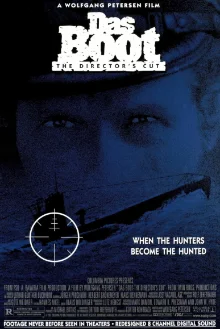
An Atlantic patrol in 1941 places the viewer inside the physical limits of a German U-boat: shared air, restricted movement and machinery that must keep working under attack. Adapted from Lothar-Günther Buchheim’s novel, it draws on wartime experience without simply reproducing one patrol report. Its claustrophobia makes an effective starting point for considering how Allied anti-submarine warfare changed the risks and routines of submarine service.
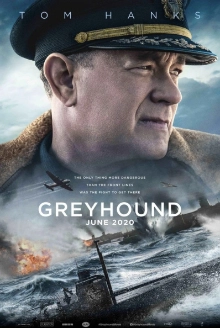
A fictional convoy crossing in 1942 concentrates the Battle of the Atlantic into a commander’s struggle with incomplete information and continuous responsibility. The mid-ocean gap, beyond reliable land-based air cover, gives each contact particular urgency. Rather than charting the whole campaign, the film helps viewers consider escort decisions, station-keeping and fatigue, and how protecting merchant ships differed from seeking a decisive fleet battle.
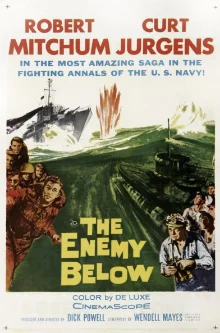
A fictional duel between an American destroyer escort and a German submarine reduces the Atlantic struggle to two commanders interpreting each other’s movements. Sonar, depth charges and the submarine’s need to preserve its options make the contest more than an exchange of firepower. The mutual respect is a dramatic construction, but the encounter provides a useful way into the technical asymmetry of surface and underwater warfare.
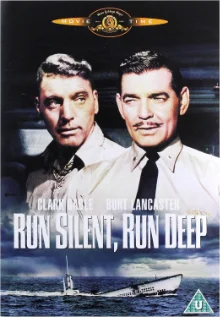
The Pacific submarine campaign is viewed through a fictional commander whose pursuit of a particular Japanese destroyer disrupts confidence aboard his own boat. Torpedo attacks and submerged approach place leadership conflict inside a demanding technical environment. Its connection to the wider war lies in the pressure on American submariners to attack Japanese shipping, while the obsessive personal vendetta belongs to the film’s dramatic treatment of command.
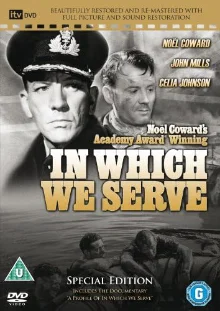
A destroyer’s loss is used to connect naval combat with the homes, jobs and relationships behind its crew. Released in 1942, the film is itself part of Britain’s wartime effort to explain service and sacrifice to civilian audiences. Its fictional ship and flashbacks make it especially useful for examining contemporary ideas of class, duty and national solidarity, alongside the dangers faced by destroyers in the early war.
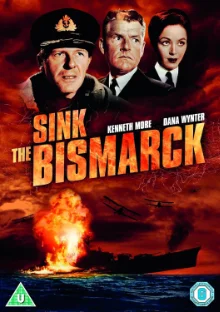
The pursuit of Bismarck in May 1941 connects operations at sea with the Admiralty’s need to interpret reports and coordinate widely separated forces. The loss of Hood gives urgency to preventing a powerful raider from threatening Atlantic shipping. While the film dramatises the people directing the hunt, its operational framework offers enthusiasts a way into the interaction of reconnaissance, carrier aircraft, surface ships and strategic priorities.
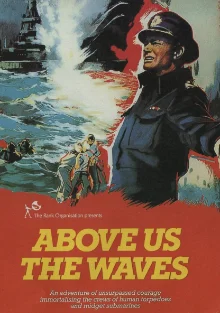
British attempts to strike Tirpitz in Norwegian waters show how a naval threat could generate operations far from the convoy routes it endangered. Training and the X-craft attack of 1943 place small crews and specialised equipment at the centre of a campaign against a capital ship. The film condenses the participants’ experiences, but encourages investigation of midget submarines, reconnaissance and the hazards of reaching a heavily defended anchorage.
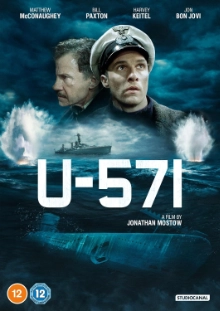
An invented American mission to seize German Enigma material creates a tense submarine adventure, but changes an important historical context. The Royal Navy captured Enigma equipment from U-110 in May 1941; the US Navy’s capture of U-505 followed in 1944. Watching those distinctions in mind makes the film useful for discussing codebooks, intelligence and boarding operations without mistaking its fictional crew for the participants in either event.
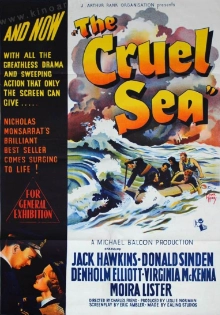
Years of convoy escort are shown as an accumulation of weather, watchkeeping, losses and decisions that cannot always save everyone. The fictional ships and characters draw on Nicholas Monsarrat’s naval experience, making the film a strong companion to the less spectacular routines of the Atlantic campaign. Its focus on exhaustion and responsibility explains why escort warfare demanded endurance as well as successful attacks on submarines.
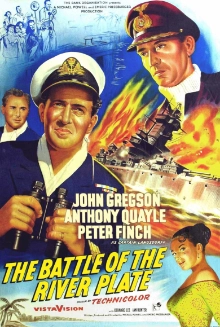
The December 1939 encounter with Admiral Graf Spee connects cruiser tactics to commerce protection and the limits imposed by neutral waters. The film follows the hunt into the diplomatic setting of Montevideo, where information and expectations mattered alongside damage at sea. It gives enthusiasts a compact example of an early naval campaign in which operational decisions continued after the guns had fallen silent.
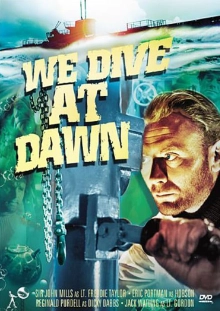
A fictional British submarine pursuit of a German battleship places planning and crew cooperation inside the restricted resources of underwater warfare. The danger comes not only from the enemy, but from fuel, distance and the challenge of getting home. Released in 1943, the film also shows how contemporary cinema presented submarine service to a wartime audience when actual operations and losses could not be fully disclosed.
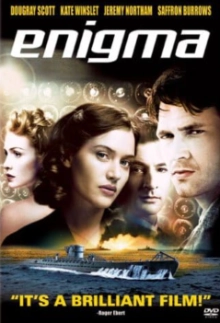
Bletchley Park in 1943 provides the setting for a fictional mystery built around the importance of reading German naval traffic. A missing woman and a codebreaking crisis make intelligence work personal, while endangered Atlantic convoys explain its military stakes. Its invented protagonists are best distinguished from the real teams, captured material and mathematical advances behind naval Enigma, making it a companion to the campaign rather than a documentary of a breakthrough.
Air War
Fighter defence, bomber operations and precision raids form the core of this selection. Alongside the Battle of Britain and bombing over Europe, the films explore Czech pilots in exile, the Tuskegee Airmen and the attacks depicted in Pearl Harbor. Training, leadership and the strain of repeated missions connect these stories.
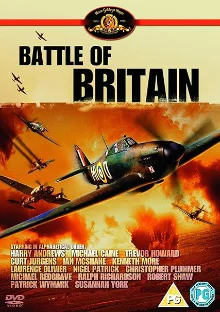
The aerial struggle over southern England in 1940 is presented through pilots, command centres and the pressures on both air forces. The film gives enthusiasts a way to connect individual combat with the larger problem of sustaining Fighter Command under attack. Its broad reconstruction is most useful alongside study of radar, ground control and airfield operations, which explain the defensive system behind the Spitfires and Hurricanes.
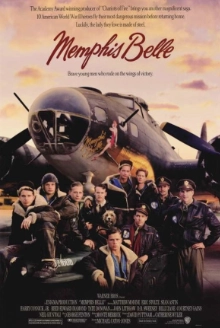
The final mission of a fictionalised B-17 crew condenses the risks of the American daylight bombing offensive into one flight. Formation discipline, damaged machinery and interdependent crew positions show why survival was a collective task. Although the aircraft and its celebrated wartime tour are historical, the feature’s mission combines dramatic incidents; it is a starting point for studying bomber operations, rather than a record of the real crew’s last sortie.
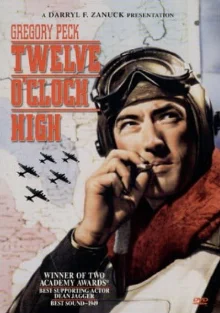
An American bomber group based in England becomes a study of how command responds to losses, declining confidence and repeated exposure to danger. The fictional unit draws the viewer beyond aerial spectacle into the organisation of daylight bombing. Its lasting historical interest is the tension between operational demands and psychological endurance, including the cost to a leader who tries to make every crew function under extreme pressure.
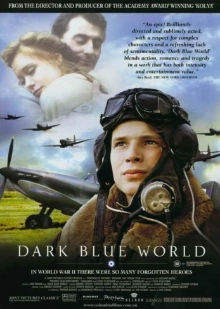
Czechoslovak pilots serving with the RAF connect the Battle of Britain to exile, international cooperation and a difficult post-war return. The central friendship and romance are fictional, but the framing points towards the suspicion faced by some Western-serving airmen under Communist rule. For enthusiasts, the film widens the familiar British air-war story by asking how participation in a common Allied cause could lead to sharply different peacetime outcomes.
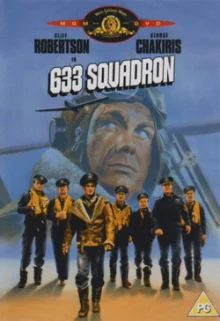
An imagined Mosquito attack through a Norwegian fjord turns precision bombing into a problem of approach, timing and dependence on resistance support. The fictional squadron’s mission reflects the cinematic appeal of low-level operations without reconstructing a specific raid. It is useful for considering the relationship between aircraft capabilities, terrain and target selection, while its extraordinary objective and sacrifice remain part of an adventure narrative.
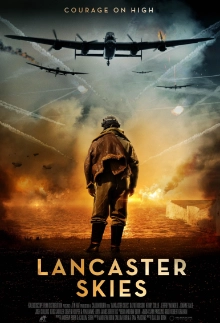
A fictional RAF crew in 1944 provides a small-scale view of the night bombing campaign, with a returning pilot carrying damage that training alone cannot repair. The Lancaster’s crew roles make trust and coordination central to the story. Its historical connection is the repeated strain of Bomber Command service, offering viewers a personal entry point into operational tours rather than a survey of the offensive’s targets or strategic results.
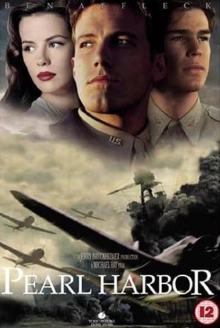
The attacks of December 1941 and the Doolittle Raid of April 1942 frame an invented romance between pilots and a nurse. That combination creates a broad popular image of America’s entry into the Pacific war, but compresses history around fictional participants. Enthusiasts can compare it with more procedural accounts to consider how personal melodrama changes the emphasis placed on intelligence failures, military preparation and the consequences of aerial attack.
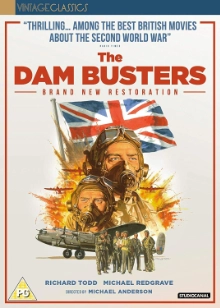
Operation Chastise on the night of 16–17 May 1943 connects Barnes Wallis’s engineering work with the specialised training of Guy Gibson’s 617 Squadron. The film makes invention, testing and exact flying requirements central to understanding the raid. Its emphasis on aircrew courage is best complemented by study of the flooding and deaths on the ground, so the attack’s human consequences are considered alongside its technical achievement.
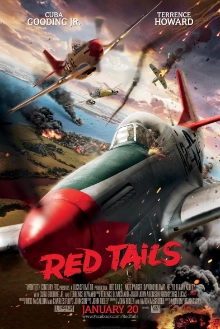
The Tuskegee Airmen’s service places the air war over Europe within the history of racial segregation in the US armed forces. Fictional pilots and heightened combat scenes make this an adventure inspired by a real unit, rather than a record of individual missions. Its strongest historical question concerns how African-American airmen had to win access to combat and recognition while contributing to the bomber escort effort from Italy.
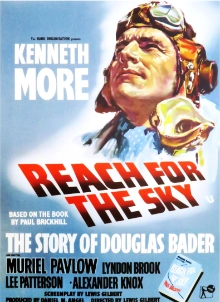
Douglas Bader’s return to flying after losing both legs connects rehabilitation with the demands of RAF fighter service in 1940. The biographical narrative continues into captivity, showing how an airman’s war could extend well beyond combat sorties. For viewers interested in the Battle of Britain, it supplies an individual perspective on leadership and determination, while its celebratory portrait benefits from comparison with the wider experience of Fighter Command.
Resistance & Occupation
These films explore life under occupation through resistance networks, sabotage, rescue and the risks of infiltration. Their settings range from France, Norway and the Netherlands to Prague and the forests of Belarus. Follow the Western Europe timeline and Eastern Europe timeline which provide the military context.
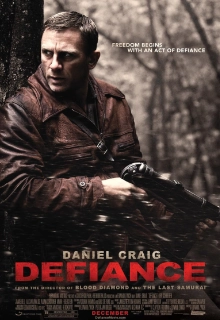
The Bielski brothers’ refuge in occupied Belarus shows that resistance could mean protecting a community as well as attacking an enemy. Forest shelter, food gathering and relationships with Soviet partisans become as important as weapons. The film dramatises the leadership conflicts of a real rescue effort that saved more than 1,200 Jews, offering a route into the history of family camps and survival outside Nazi-controlled ghettos.
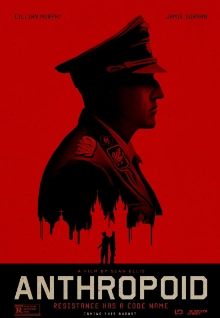
The assassination of Reinhard Heydrich in Prague in 1942 connects agents sent from abroad with the local people who made their mission possible. Preparation, concealment and the final siege show the dependence of a clandestine operation on civilian support. Its historical significance also extends to Nazi reprisals, making the film a starting point for examining resistance strategy, occupation terror and the costs imposed on communities after a successful attack.
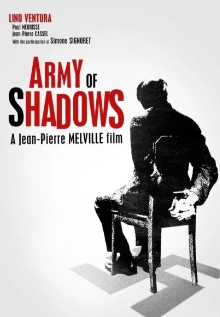
French resistance is portrayed through the slow, dangerous work of secrecy: arranging contacts, protecting identities and deciding whom to trust. Jean-Pierre Melville’s adaptation gives the occupied landscape an atmosphere of uncertainty rather than the reassurance of a conventional victory story. Its fictional network helps viewers consider the moral burdens of clandestine organisation, where escape and survival might depend on decisions that remained painful after liberation.
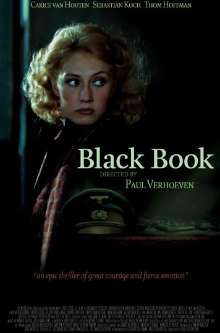
The occupied Netherlands in 1944–1945 provides the setting for a fictional Jewish woman’s infiltration of German security circles. Disguise and betrayal make resistance appear as an unstable network of competing motives rather than a uniformly heroic movement. The transition towards liberation broadens the questions to revenge and the identification of collaborators, inviting enthusiasts to distinguish the thriller’s twists from the real dilemmas of occupation and its aftermath.
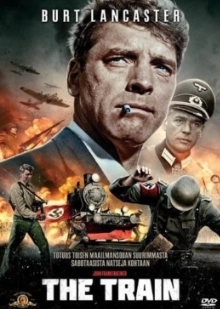
The removal of French artworks as German forces retreat in 1944 links occupation to cultural plunder and the control of rail transport. Railway workers’ practical knowledge becomes a form of resistance, but every delay can carry a human cost. Its dramatised struggle is especially useful for asking why objects were targeted and preserved, and whether the protection of national heritage could justify risking lives during liberation.
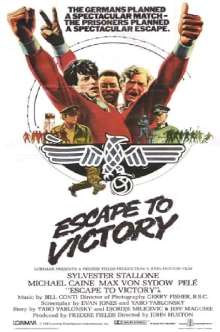
A fictional football match in occupied Paris turns sport into a contest over propaganda and the possibility of escape. Allied prisoners and local resistance helpers use a public spectacle organised by the occupiers for purposes of their own. The film’s historical interest lies in that tension between performance and control; its match and rescue plan should be treated as adventure fiction, rather than a reconstruction of a wartime sporting event.
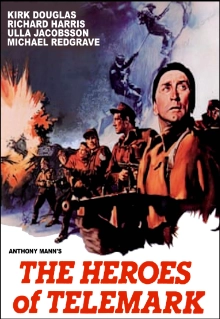
Norway’s heavy-water sabotage campaign is condensed into an adventure linking local knowledge with Allied concerns about German nuclear research. The Vemork plant and efforts to prevent a shipment give the film recognisable historical anchors. Composite protagonists simplify a sequence involving several operations, so it works best as an introduction to resistance cooperation, industrial targets and the difficult choices involved when sabotage could endanger civilians.
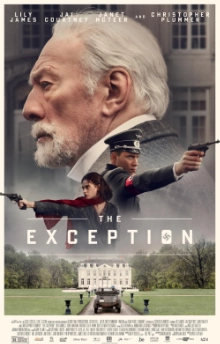
The exiled Kaiser’s household in the German-occupied Netherlands in 1940 becomes a setting for espionage, concealment and compromised loyalties. A fictional relationship between a German officer and a Jewish maid puts private choices under pressure from occupation and Nazi antisemitism. The film offers an unusual view of power and personal resistance within an elite household, rather than a documentary account of Wilhelm II’s final years.
The Holocaust & Persecution
Ghettos, concentration camps and official conferences reveal different aspects of Nazi persecution and the Holocaust. This selection of films explores survival, rescue, forced labour and attempts to expose mass murder, drawing on memoirs, historical figures and fictional stories.
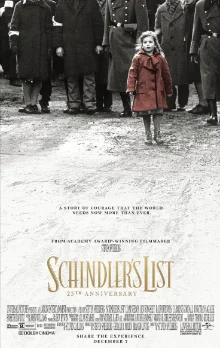
Kraków’s ghetto, the Płaszów camp and Oskar Schindler’s factories connect individual rescue to the administrative machinery of the Holocaust. The film shows how employment and personal intervention could create a precarious exception within a system designed for persecution and murder. Based on real people but shaped as drama, it offers a starting point for investigating Schindler’s actions and the experiences of the Jews whose survival depended on them.
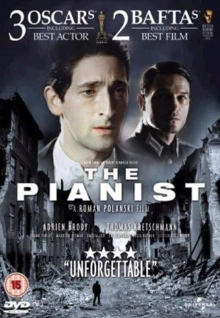
Władysław Szpilman’s survival provides a personal route through the confinement, deportations and destruction inflicted on Warsaw’s Jews. The changing spaces available to him—ghetto streets, hiding places and ruined buildings—make persecution visible through the loss of ordinary life. Based on his memoir, the film also encourages viewers to distinguish the Warsaw Ghetto Uprising of 1943 from the separate Warsaw Uprising of 1944, both part of the city’s wartime history.
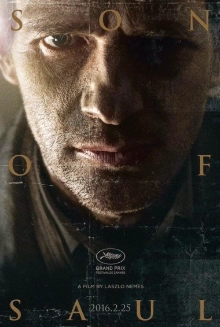
Auschwitz-Birkenau in 1944 is approached through a Jewish prisoner forced into the Sonderkommando, with the camera restricting what the viewer can see. The fictional burial quest unfolds amid mass murder and preparations for revolt. That formal choice makes the film a demanding companion to historical study of coerced labour in the killing process; its individual story should never obscure the perpetrators’ responsibility for the system surrounding him.
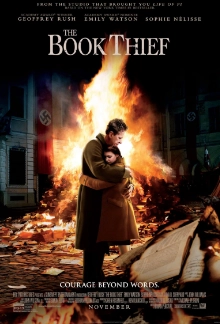
A fictional German household makes persecution visible through reading, concealment and the danger of sheltering a Jewish man. The child’s perspective connects Nazi control of public culture with private decisions that could threaten an entire family. It is a useful discussion of conformity and small acts of refusal on the German home front, while its literary framing and imagined community distinguish it from survivor testimony.
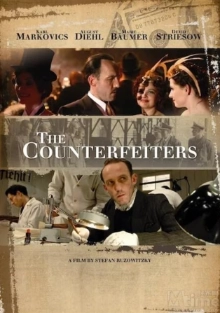
Operation Bernhard connects the Sachsenhausen camp system with the Nazi attempt to exploit prisoners’ specialist skills for currency forgery. Inspired by survivor experience, the film places coerced work between the wish to stay alive and the impulse to obstruct the operation. For enthusiasts, its focus is the restricted choices available under terror, rather than a claim that the prisoners’ apparent privileges removed them from persecution.
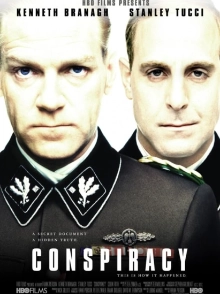
The Wannsee Conference of 20 January 1942 is dramatised as a meeting in which administrative language conceals and enables mass murder. It is essential context that Nazi killing was already underway: Wannsee coordinated the implementation of genocide, rather than marking its beginning. Reconstructed conversation turns the surviving protocol into a study of bureaucratic participation, showing how officials discussed deportation, authority and categories of victims within an exterminatory policy.
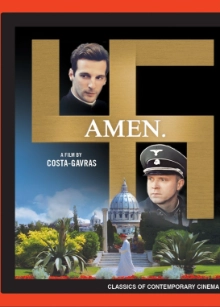
Kurt Gerstein’s attempts to report Nazi extermination place this film directly within the history of the Holocaust and the question of who knew about mass murder. His partnership with the fictional priest Riccardo Fontana dramatises the effort to alert religious authorities and the wider world. For viewers, its central historical questions concern witness, institutional responsibility and the limits of intervention while persecution and killing continued.